
“In 2019, 66 million tons of wasted food was generated in the food retail, food service, and residential sectors, and most of this waste (about 60%) was sent to landfills,” according to the United States Environmental Protection Agency (EPA).
Food waste in America is astronomical. However, the Bishop’s Kitchen has a system in place to help minimize the waste generated while simultaneously ensuring students are fed. This includes the specific quantity of food ordered each week, and making the menu. Additionally, we have the power to only serve ourselves the amount we will eat.
According to Science Teacher Dr. Pamela Reynolds, “In developed nations, we have so much [food] that we don’t see waste as that consequential.” If we view food as plentiful, people often treat it as that: plentiful and easily wasted. She elaborated, “Quantity in economically thriving nations is a big problem.”
Food Service Manager Jason Fleck is currently in his first full year of working at Bishop’s. He described that the first step is ordering the right amount of food for the week. To do this, Chef Fleck looks at the history of how much food they have served in years past, which gives a good estimate of how much food we need to feed the Bishop’s community.
When creating the menu for the week, Chef Fleck is very mindful of which specific dish is served each day in order to use up ingredients by the end of the week. “We try to have a menu where you have something one day, and then you can upcycle whatever’s left over. Say we have broccoli one day, then we can have low mein noodles later in the week, stir-fry, or veggie medley,” he explained.

Athena Georgiou (‘29), who is a regular at the vegetarian bar, enjoys how the ingredients are used in different ways throughout the week. She said, “For students who go to the vegetarian bar every day, it’s nice to have a switch up the next day because it makes me feel like the kitchen is trying to accommodate students’ dietary restrictions while also giving more variety.”
Fridays are reserved for “Chef’s Choice,” allowing Chef Fleck to come up with a meal based on the ingredients in the kitchen by the end of the week. Chef Fleck explained, “The reason we do Chef’s Choice is that it doesn’t make a lot of sense to order more food if we already have stuff that is still of high quality.”
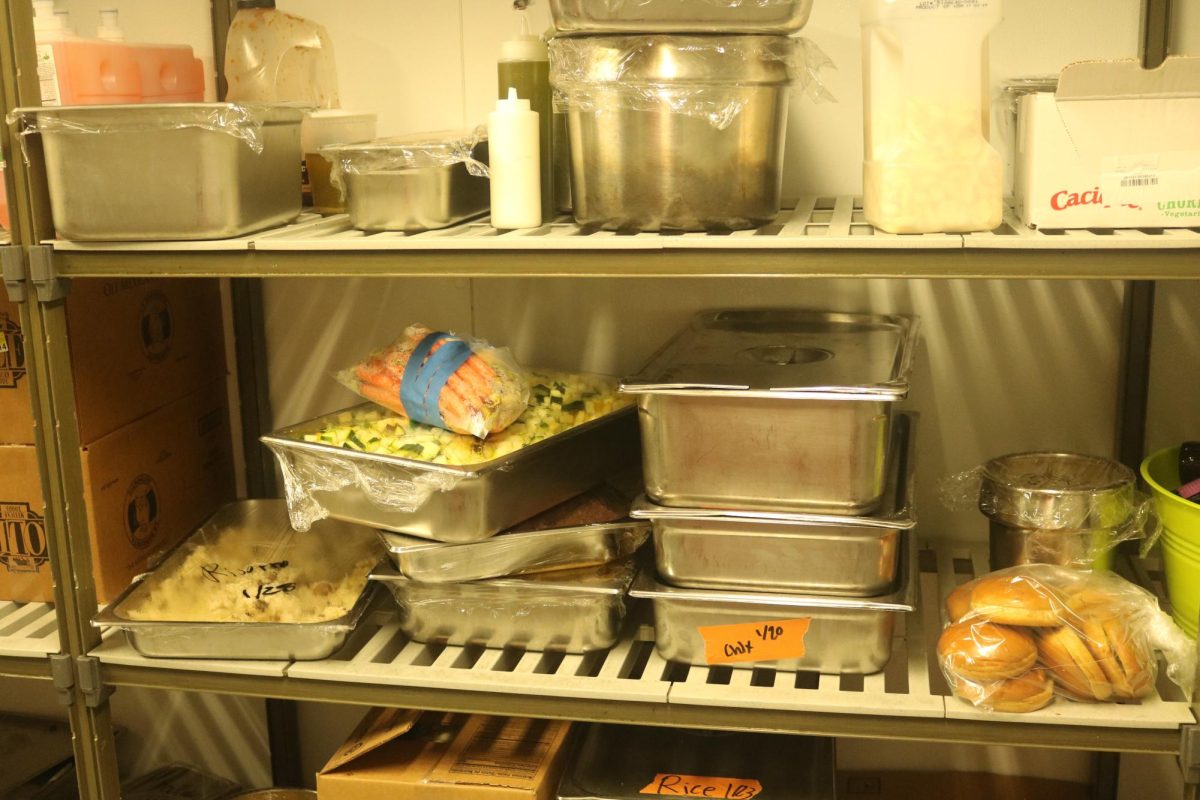
Even though the kitchen tries to calculate the right amount of food to order for a given week, sometimes they end up with leftover ingredients by the end of the week. For example, on a day that root vegetables were served, the pans that never made it out to the lunch line (due to the vegetarian bar still having food) are kept in the kitchen. This then creates “Chef’s Choice,” a way for Chef Fleck to use these ingredients and reduce waste.
Dr. Reynolds commented, “Chef’s choice is a great way of taking in those things that we didn’t finish and using them for repurposing in a different manner later on. It’s great and reduces our waste.”
In addition to the work the kitchen staff does to prevent food waste, Chef Fleck mentioned that Bishop’s hired a company to check on the school’s sustainability and best practices for managing waste.
Additionally, Bishop’s is working to minimize waste in many aspects of the cafeteria, beyond just the main meals. For example, have you noticed that there are no more cartons of orange juice? Bishop’s replaced the thousands of cartons used on orange juice with the juice dispenser. This way, students have a greater variety of juices (such as apple, orange, and tea), and we can cut back on the amount of cardboard we use.

Aside from the efforts that the Bishop’s kitchen has made to reduce food waste, we also have a responsibility to do our part.
Dr. Reynolds said, “We can refuse food when we are in line. In other words, when someone is serving a plate, you don’t have to take it. You can say, oops, I don’t want the chicken, but I really want that piece of Parmesan bread. Or I want the rice, but I don’t want the meat item.” Being intentional about the food you want in line helps reduce the food that is thrown away after eating. Additionally, Dr. Reynolds explained the power of going back for seconds instead of putting too much on a plate and throwing half of it out.
Food waste, an ever-growing issue in America, can be reduced at Bishop’s through both the kitchen staff’s methodical planning and our conscious effort to build our lunch plates. This issue will not disappear overnight, but the community has been working hard to reduce food waste one day at a time.