
A Star Trek poster of Spock, giant metallic slinkies, and a winged pig dangling from the ceiling. These are just a few glimpses into the mind of Physics Teacher Mr. Marcus Milling via his natural habitat: the classroom. But every year, before a single apparatus is touched, he opens ninth grade Conceptual Physics Enriched (CPE) with a question: What is science?
Optical lenses, fan cars, and hooked weights — the answer to that question lies across the tools of his labs. “We want the students to be the architects of their own knowledge,” Mr. Milling said. “I want them to do the labs, collect the data, see how they put it together… [and] where it all came from.”
After over 13 years of teaching five different courses to more than 1,000 students at Bishop’s, Mr. Milling is set to retire at the end of this school year. Drawing on 36 years of teaching at schools in Ghana, Morocco, and California, Mr. Milling has reshaped how science is taught at Bishop’s.
“He is incredibly good at [developing labs],” Chemistry Teacher Dr. Pamela Reynolds, who is also retiring this year after a remarkable career, explained. “There was a commitment to experimental science here that I hadn’t seen in other schools.”
That commitment is what many students call the “Milling Method.” As the former Science Department Chair, this entailed refusing to hand over answers when questions sufficed.
Physics Teacher Mr. Ben Heldt said one thing he has tried to incorporate from Mr. Milling is how he “makes the students do the intellectual labor, even when they don’t want to.”
“The first thing you notice is… he doesn’t just tell you the answers… he asks you questions and has you figure things out,” Andrew Wang (‘27), who had him for both CPE and Advanced Honors Physics, said.
Ryan O’Donovan (‘27), who also took CPE, said, “He’ll always challenge your perspective and make you think in a new way… honestly, that’s what science is about.”
His proudest “Milling Method” moment? When a freshman, learning about forces and free-body diagrams, suddenly stopped.
“Wait a minute,” they said. “So being in a gravitational field is no different than just accelerating?”
Mr. Milling smiled at the memory of that student piecing parts of the puzzle together: “It was like, wow, okay, that’s what Einstein said when he started developing the theory of relativity… A ninth grader just came up with that because we put the things together so she could see it.”
One of the clearest ways Mr. Milling’s impact will be remembered is his curriculum. Mr. Heldt described the ninth grade CPE course as “really smart,” “accessible,” and “honed over the years,” continuing to shape the department today. Before the “Milling Era,” Bishop’s science followed the standard sequence: biology in freshman year, chemistry in tenth grade, and finally, physics.
“It made no sense scientifically,” Mr. Milling commented, “To really understand the chemistry well, you have to have at least some physics first.”
What followed was years of meticulous redesigning. Logistically, it was a huge challenge. With the support of faculty members who taught different subjects to facilitate the transition, Mr. Milling, as the Science Department Chair, wrote the entire CPE curriculum.
He designed his own labs and restructured the sequence of classes. Under this new plan, freshmen start with more observational physics — like light, optics, and waves — before transitioning in the second semester to more math-heavy topics, such as forces and motion.
“It’s absolutely brilliant,” Physics Teacher Ms. Bryn Bishop said. “It prioritizes curiosity, observations, and sense-making before abstraction… It teaches students that their experience, their observations, and their thinking matter.”
The llama in the elevator, the English Department, and a fish named Eric. These were all part of the creative worksheets he developed for the Physics curriculum. “There was definitely a point where it was like, everybody’s John or Mary,” Mr. Milling said. “I’ve got to be more creative with this.”
He populated his physics problems with a repeating cast of characters: Cameos of teachers in the English Department and the World Languages Department are often depicted with speech bubbles discussing physics concepts. Eric the fish was borrowed from a Monty Python sketch about buying pet licenses. There are also Pink Floyd references, such as using the cover of “The Dark Side of the Moon” to introduce the refraction of light.
The slinkies stretch, the pig spins midair, and Spock watches from the wall — but what people remember most isn’t these cool objects; it’s Mr. Milling.
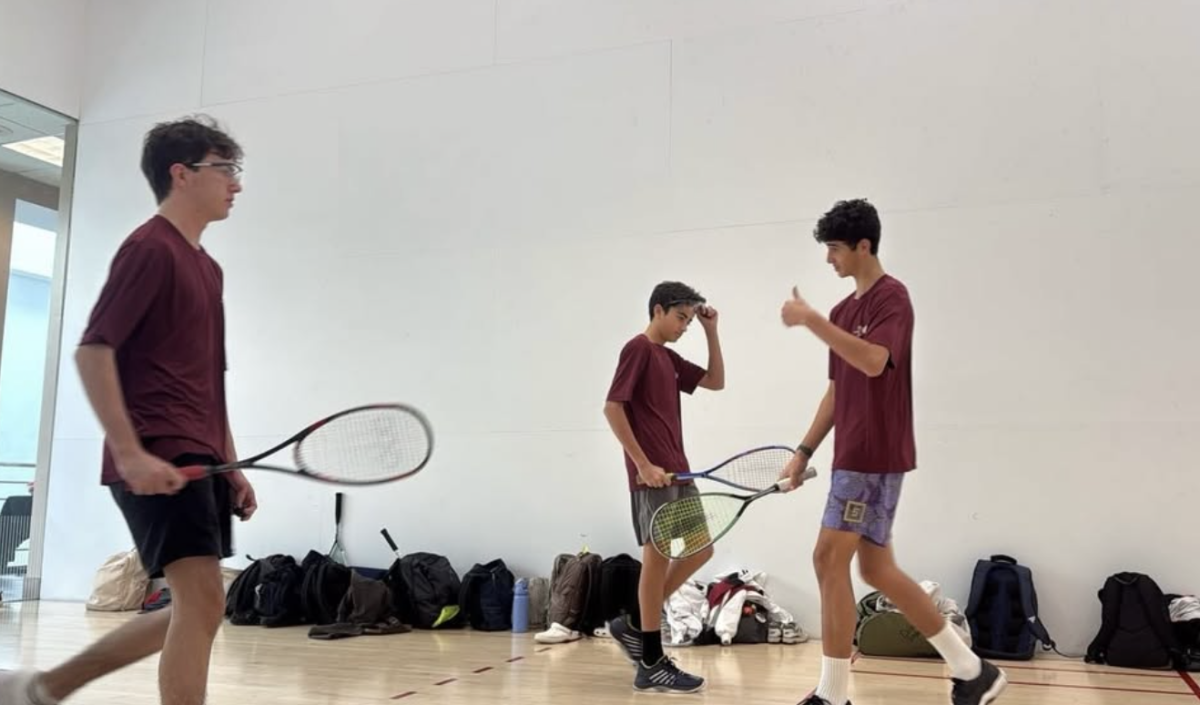
The labs are often the highlight of classes. CPE student Anya Maru (‘29) fondly remembered that during the study of longitudinal waves, Mr. Milling let her and her friends send a giant rainbow plastic slinky cascading down the stairs under his “chill” supervision.
Andrew recalled a demonstration with a Tesla ball where Mr. Milling “basically electrocuted the entire class,” and another where he demonstrated the Law of Inertia by placing someone’s head next to a heavy bowling ball and knocking a hammer on the other side. “It was exciting, kind of scary, but really fun,” Andrew laughed.
Over more than a decade of working together, Dr. Reynolds said his most common greeting — “how’s it going?” — is a constant way of checking in. Whether they are passing in the rushed blur of the hallways, crossing paths in the faculty lounge, or exchanging lab equipment, the question is always “sincere.” She added, “If you said ‘not so great,’ he would stop right there… and say, ‘hey, you want to talk about it?’”
“I’m going to miss the ‘how’s it going?’” Dr. Reynolds reflected.
Daniel Guo (‘27), president of both Physics and Rocketry Clubs, also works closely with Mr. Milling on physics competitions, and described him as an “anchor.” “You can really talk to him about anything, and he’s always stable for you,” Daniel said. “High school is really emotional, but… He was there with you, through it all. He truly cares about his students.”
Daniel recalls the phrase he hears every single Tuesday after school while working in Mr. Milling’s classroom: “Turn off the lights and lock the room when you’re done,” as Mr. Milling heads out in his motorcycle jacket.
One afternoon in CPE, Sabrina Feldman (‘26) found herself in an unexpected discussion about 1950s American politics. “It was really interesting to hear his perspective,” she said. Sabrina distinctly remembered that when one of her classmates asked Mr. Milling for help, he said “one second” and turned back to continue their “little history lesson.”
“It was funny because that’s exactly who he is,” she said. “He’s always interested in having conversations with students to have discussions and talk about issues that don’t just relate to physics.”
“I think we’re losing so much institutional memory… so much understanding of what teaching is at Bishop’s and what makes students at Bishop’s successful,” Mr. Heldt said. “We’re also losing someone generous, kind, a good person to talk to… We’ll be sad.”
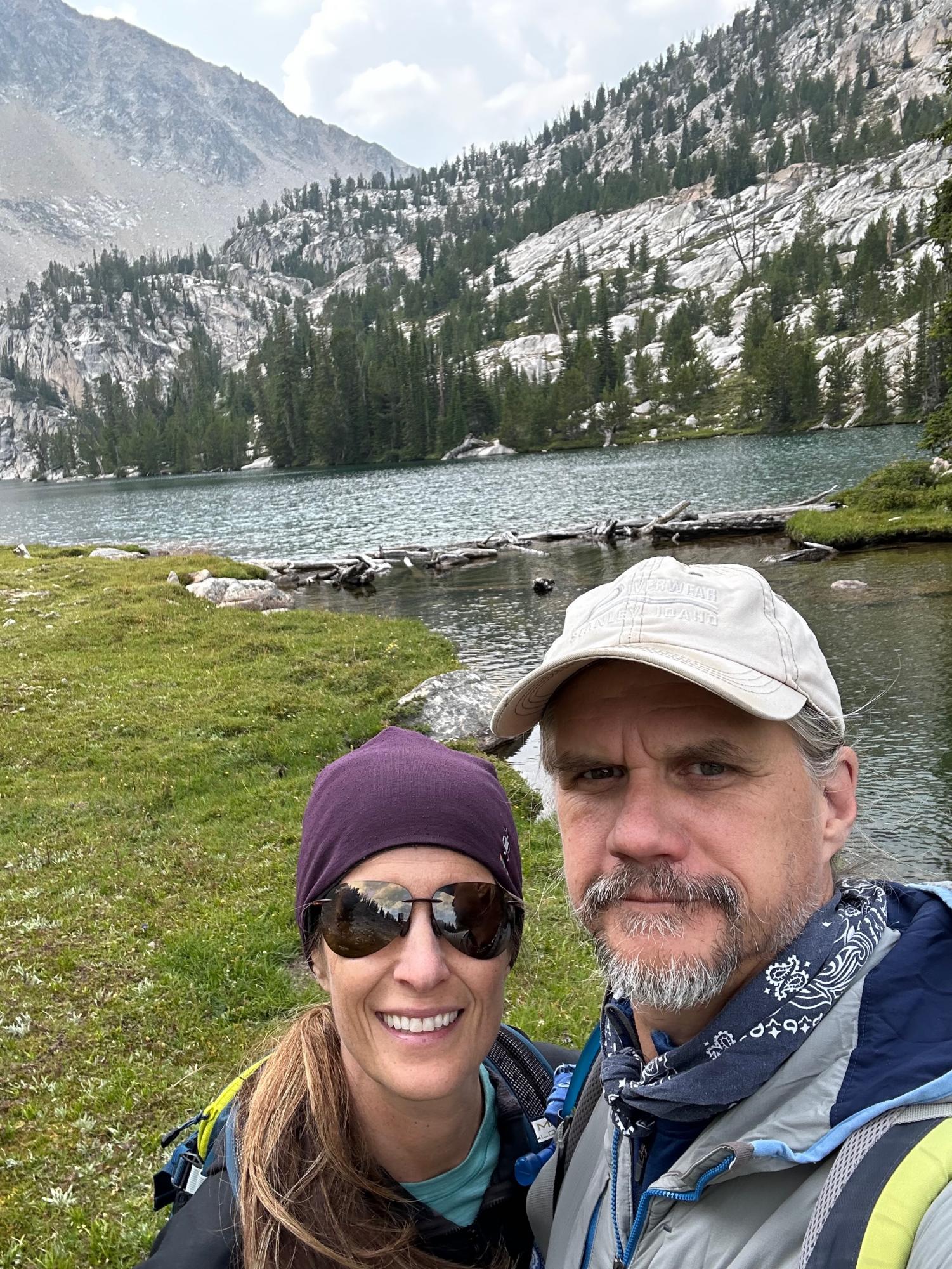
After retiring, Mr. Milling plans to move to his cabin in the Rocky Mountains, 100 miles away from Yellowstone, where he can look out over the river and spy on wildlife through his binoculars. He also plans on adopting a big dog from the local shelters — perhaps one, as he called it, “that ran off the ranches” — and travel the world, planning trips from the Alps to Austria, Italy, and Vienna, to “just hike around with my wife.”
For future Bishopians studying science, Mr. Milling’s advice is to “allow your curiosity to guide you… go and explore a lot of things where you don’t know the answer in the beginning.”
“If you make careful observations… You will end up not just getting a good grade, but actually understanding where things come from,” Mr. Milling continued.
Even though Mr. Milling plans to leave the Star Trek posters behind, the beloved flying pig will be packed away soon. As Mr. Milling prepares to put on his motorcycle jacket, turn off the lights, and lock the classroom door for one last time, his legacy will remain.
As Dr. Reynolds put it: “The curriculum will live on, I promise you. But the man will be missing.”