
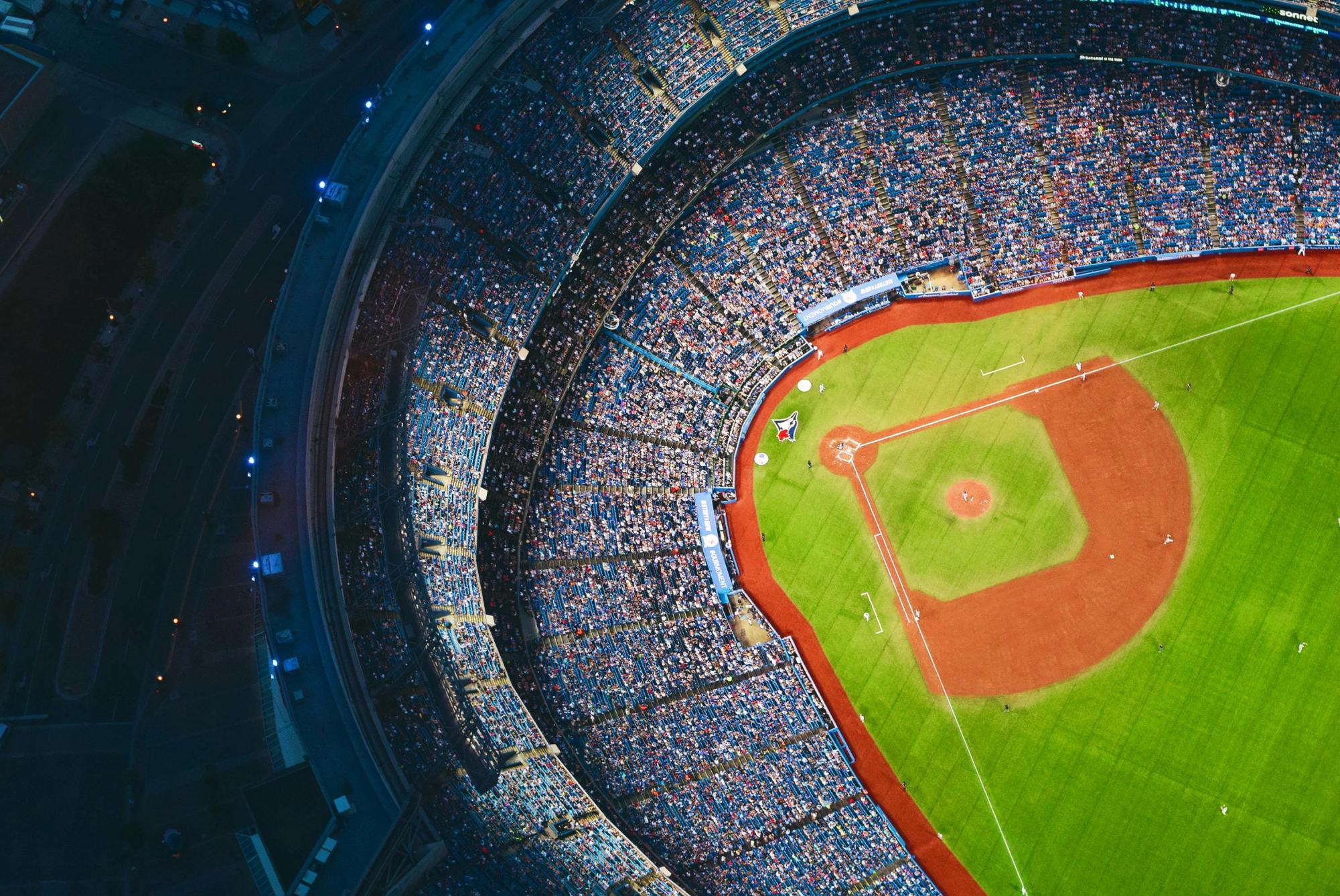
Six minutes past midnight on Sunday, November 1, Rogers Centre — home of the Toronto Blue Jays — fell silent. A drive off the bat of Los Angeles Dodgers catcher Will Smith soared high over the green grass and plummeted into the Blue Jays’ bullpen. Smith’s solo home run gave Los Angeles a 5-4 lead.
The Los Angeles Dodgers defeated the Toronto Blue Jays in the 2025 World Series, culminating in a captivating Game 7 that went to the 11th inning. This marked the Dodgers’ second consecutive championship — the first back-to-back titles since the Yankees won three consecutive titles from 1998-2000.
The thrilling series had it all: from Game 3’s 18-inning marathon that tied the longest World Series game, to standout performances from stars and records for the history books.
Game 7 was the sixth Game 7 in World Series history to go to extra innings. The Blue Jays got on the board early with a 3-run lead; however, the Dodgers showed their grit, in part because manager Dave Roberts utilized their deep pitching staff. Pitchers Shohei Ohtani, Blake Snell, Tyler Glasnow, and Yoshinobu Yamamoto all saw time on the mound.
Second baseman Miguel Rojas stunningly homered with one out in the ninth inning off Blue Jays closing pitcher Jeff Hoffman to tie the score. It was Rojas’ first extra-base hit of the postseason, joining Hall of Famer Bill Mazeroski in 1960 as the only players in World Series history to hit a game-tying home run in the ninth inning of a Game 7.
Just five days earlier, Game 3 stretched to 18 innings, tying the record for the longest World Series game ever played. The contest, lasting six hours and 39 minutes, meant that players got little rest before Game 4, which started the next afternoon. A regulation Major League Baseball (MLB) game consists of nine innings, meaning that the Dodgers and Blue Jays essentially played two games consecutively, without any breaks.
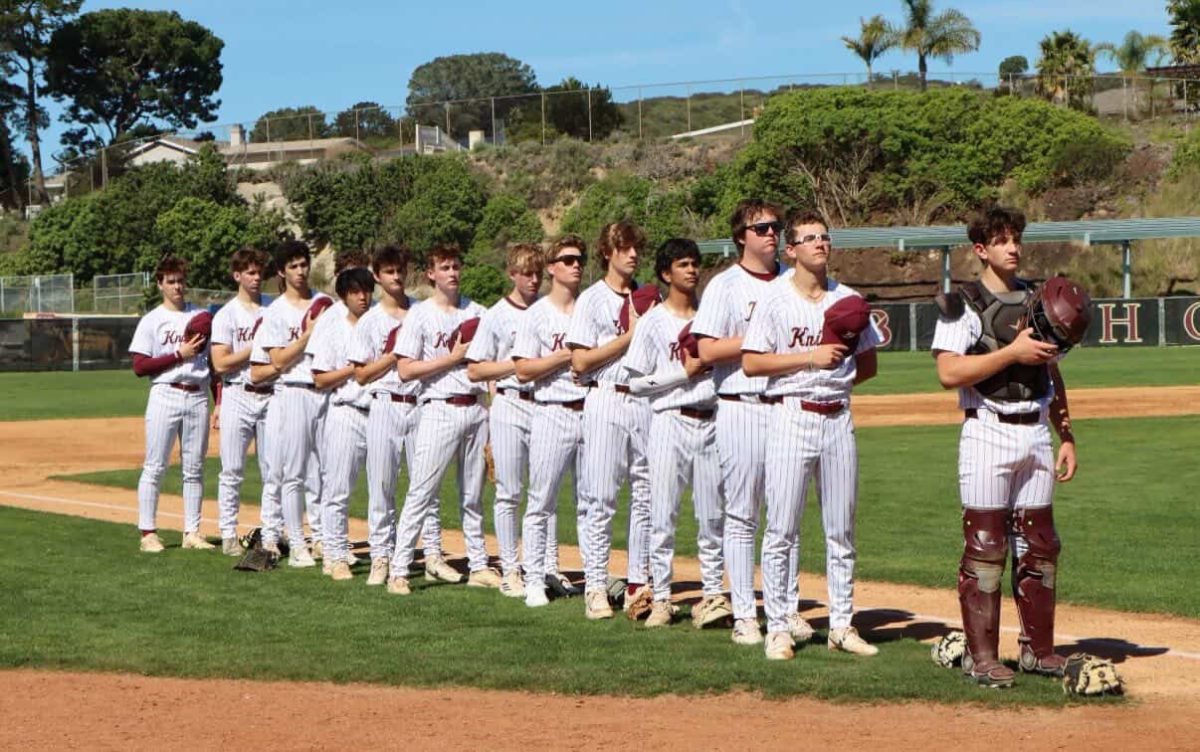
“18 innings of baseball is more of a mental drain than a physical drain,” explained Bishop’s Varsity Baseball Head Coach BK Santy. Importantly, he noted that the physical game “is not particularly taxing on the body compared to most other sports.”
College Counselor and JV Baseball Head Coach Mr. AJ Jezierski observed how players had to remain focused on every pitch for over six and a half hours, maintaining their concentration at the plate, in the field, and in the dugout.
What made Game 3 particularly remarkable was how deep both teams dug into their rosters. The Dodgers brought in relief pitcher Will Klein, who wasn’t even on the roster until the World Series began. Klein threw four scoreless innings, exemplifying what Mr. Jezierski called the “next man up mentality” required in playoff baseball.
Starting pitcher Yoshinobu Yamamoto’s performance was one of the most outstanding examples. He threw a complete game in Game 2 — pitching all nine innings without relief — then came back to win Games 6 and 7, tossing 96 pitches in Game 6 and 34 more the next day without rest.
Yamamoto became just the fourth pitcher ever to win both Games 6 and 7 of the same World Series, joining Randy Johnson (2001), Harry Brecheen (1946), and Ray Kremer (1925). With a 1.53 earned run average (ERA), three games won, and fifteen strikeouts over 17 ⅔ innings, he allowed only two earned runs and was named World Series Most Valuable Player.
Clyde Kates (’26), a Padres fan, remembered Game 3 most vividly from the series. “It was just a great duel and everyone stayed gritty, and everyone competed to the very last pitch and were playing super aggressive,” he said.
The Blue Jays had their own narrative, perhaps just as compelling, despite falling short of taking the trophy home. Finishing last in the American League (AL) East division in 2024, Toronto rebounded this year by making it to the World Series for the first time since 1993.
They scored a record 105 runs throughout the postseason push. Infielder Ernie Clement set a new record with 30 postseason hits. Remarkably, the Blue Jays actually outscored the Dodgers 34-26 in the World Series, yet when they needed to deliver in the most crucial moments, they ultimately couldn’t convert. As Mr. Jezierski observed, Los Angeles played aggressively to win, while Toronto played passively, afraid to lose.
Spanish Teacher and adamant Dodgers fan, Mr. Gregg Luna, identified this mentality as central to the team’s success. “The least expected heroes came out huge,” he said. He remarked how the biggest contributors weren’t always the big names like two-way phenom Shohei Ohtani or perennial All-Star Mookie Betts; they were sometimes simply names on the depth chart who had worked all season and made the most of their moments.
Mr Jezierski added that part of the reason for the Dodgers’ recent success has been their ability to couple superstar talent with culture, and they have found “a way to have them all buy in without having to be ‘the guy’.”
However, although the team camaraderie and collective effort played a huge role, Coach Santy noted that “Having the best all-around baseball player in the history of the sport certainly doesn’t hurt either!”
Now, with two consecutive championships and three titles in the last six years, the question inevitably arises: Are the Los Angeles Dodgers a dynasty?
Nathan Hong (’27), a Dodgers fan, was unequivocal. “Yes, since there haven’t been repeat winners since 2000,” he said. His reaction to the finish and Game 7 was pure elation: “I was jumping up and down, I was shocked. It might have been the best series I’ve ever watched, objectively.”
Despite being disappointed in the outcome as a Padres fan, Clyde agreed with the dynasty label. “I mean definitely. I mean if you have the highest payroll as well, that’s a factor too, but yeah, they’re definitely dynasty, they’re really good and they’re going to be tough to beat for a while.”
Although being a huge Dodgers fan, Mr. Luna firmly rejected the dynasty label. He cited UCLA basketball’s run of 10 NCAA championships in 12 years under Coach John Wooden as the standard for a true dynasty, suggesting that anything less than five straight titles falls short. Instead, he proposed “team of the decade” as a more appropriate title.
The debates over the pandemic-shortened 2020 championship season, as well as roster continuity between the 2024 and 2025 teams, also complicate the Dodgers’ dynasty status.
Mr. Luna captured what made this series memorable: it was “definitely a team effort” where coaching decisions and small details mattered just as much as the superstar talent. The Blue Jays played well enough to win at times, yet the Dodgers simply bested them when it mattered most.
Whether their recent slew of victories deems the Dodgers a dynasty or simply a historically great team is still up for debate. However, in the postseason, it’s not always the best team that wins — it’s often the best team that day that wins.
And many times during the most important moments this year, the Dodgers were that team.