
“Don’t kill your patient,” Lydia McDonald (‘28) warned, staring down at the banana. Grapes and bananas might seem like an unusual place to start, but in LIFE club, they become the perfect stand-in for real surgical practice, giving students a hands-on introduction to medical techniques through dissection, suturing exercises, and other interactive experiments.
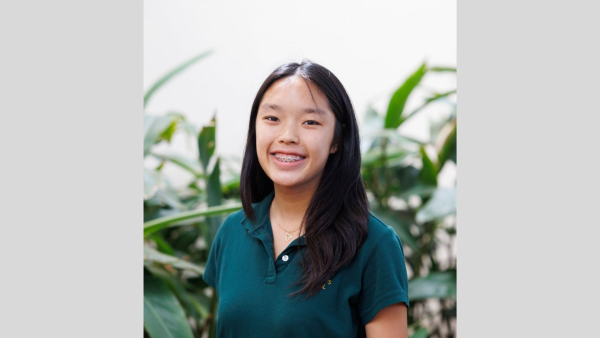
LIFE Club, short for Lab Investigations and Firsthand Experimentation, was founded this spring by Elise Dai-Liu (‘28) and Elaine Wang (‘28). The club introduces students to basic surgical and lab techniques through simple, safe experiments using real practice tools, making it the only opportunity on campus to gain exposure to using surgical tools.
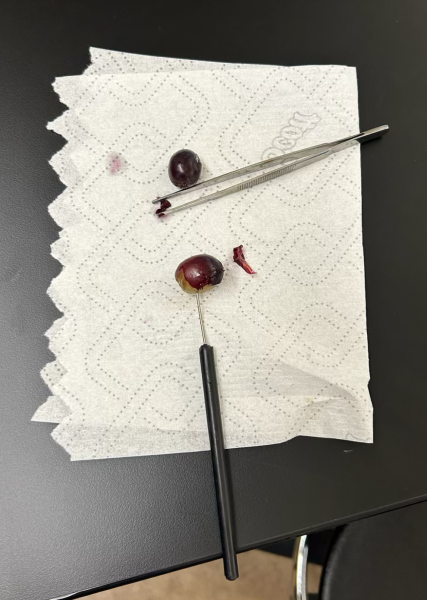
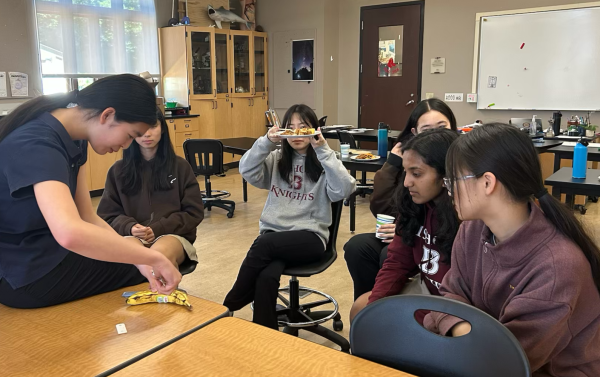
For their first meeting, on March 12, members dissected grapes by peeling away the skin and removing seeds with tweezers and dissecting probes. During the second meeting, students practiced suturing bananas, whose texture resembles the silicone pads often used by medical students to practice stitches.
The idea for the club grew out of both founders’ longtime interest in medicine. Elaine explained, “I’ve always had a lot of interactions with STEM and medicine because of my mom’s profession. She’s a doctor, which means I get treated to daily hospital stories over dinner.”
Elise’s dad also works in the medical field, and when planning activities for each meeting, Elise often researches suturing methods and surgical techniques online. She frequently shares videos with Elaine before learning the steps herself through tutorials. Her father’s work with surgical tools also helped make the club possible.
“Since Elise’s dad works with surgical tools, she brings practice tools, both reusable and disposable, for LIFE to use,” Elaine explained.
Although the club officially launched late in the school year, the idea had existed for months beforehand. Elise explained that both founders had originally discussed creating the club before midterms, but balancing extracurriculars, coursework, and finding a sponsor delayed the process. Eventually, the founders decided that launching during the second semester was the most realistic option.
It took them around five tries to find a sponsor in the Science Department because most of the teachers had full schedules or did not specialize in biology, but eventually, Biology Teacher Ms. Sarah Solberg sponsored them. “We’re so grateful to Ms. Solberg for that,” Elise said.

Despite the challenges of launching the club midyear, both founders felt the idea was worth pursuing. “I think our club idea is novel in that it actually gives people the chance to use the surgical tools,” Elise said.
“We found dissection and similar medical-related experiments to be both unique and interesting,” Elaine said, adding that it was something they wanted others to experience as well. She described LIFE as a “pretty chill club,” explaining that they go, hang out, and perform simple but engaging experiments.
For members, that opportunity to practice real techniques is what makes the club memorable.
“As a relatively new club, I’ve been really enjoying it,” Sophia Cameron (‘28) shared. “As someone who’s possibly interested in medicine, I think it’s really interesting to see what daily life would be beyond a kind of biology class.”
Others appreciate how the club turns intimidating procedures into something approachable and fun.
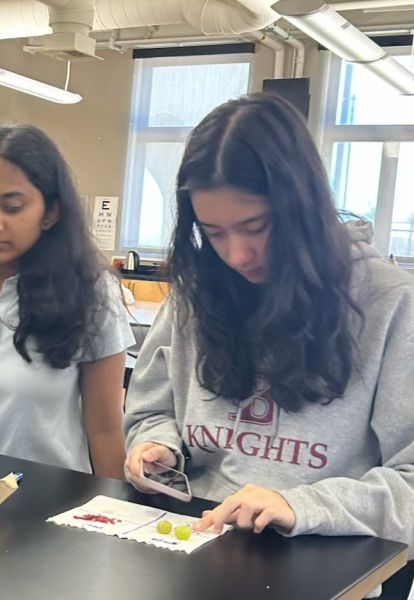
“LIFE Club is so fun!” Alisa Timmerman (‘28) said. “Even though I don’t plan on becoming a doctor anytime soon, who knows when I may have to stitch someone up during an emergency?” She added, “I love competing with my friends to see whose ‘patient’ would survive based on how neat their dissection/suturing was lol.”
“What I think makes the LIFE club really special is its dedicated and passionate leadership,” Sherilyn Li (‘28) added. “When I first heard about their idea to start this club, I was a bit daunted by the subject, but at the actual club meetings, their meeting plans, preparation, and their teaching have always been meticulous, thoughtful, and helpful for those who want to learn.”
Sherilyn also noted how the experiments they practice provide a “rare and valuable opportunity for those who want to learn the basics and build experience, but haven’t had these materials and guidance available to them.”
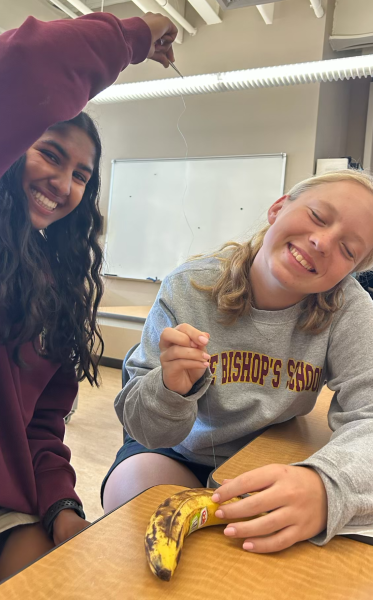
That opportunity is exactly what Elise and Elaine hope students take away from the club. “Attendees get to participate in fun, medical-related experiments that aren’t like anything you’d find in a high school science class, using real practice tools that students studying pre-med use,” Elaine said.
Even students with only a small interest in medicine are encouraged and welcome to attend. Elaine concluded, “Regardless of whether you decide to participate in the experiment or just watch and chat about it, you’ll walk away with a new experience about medicine.”