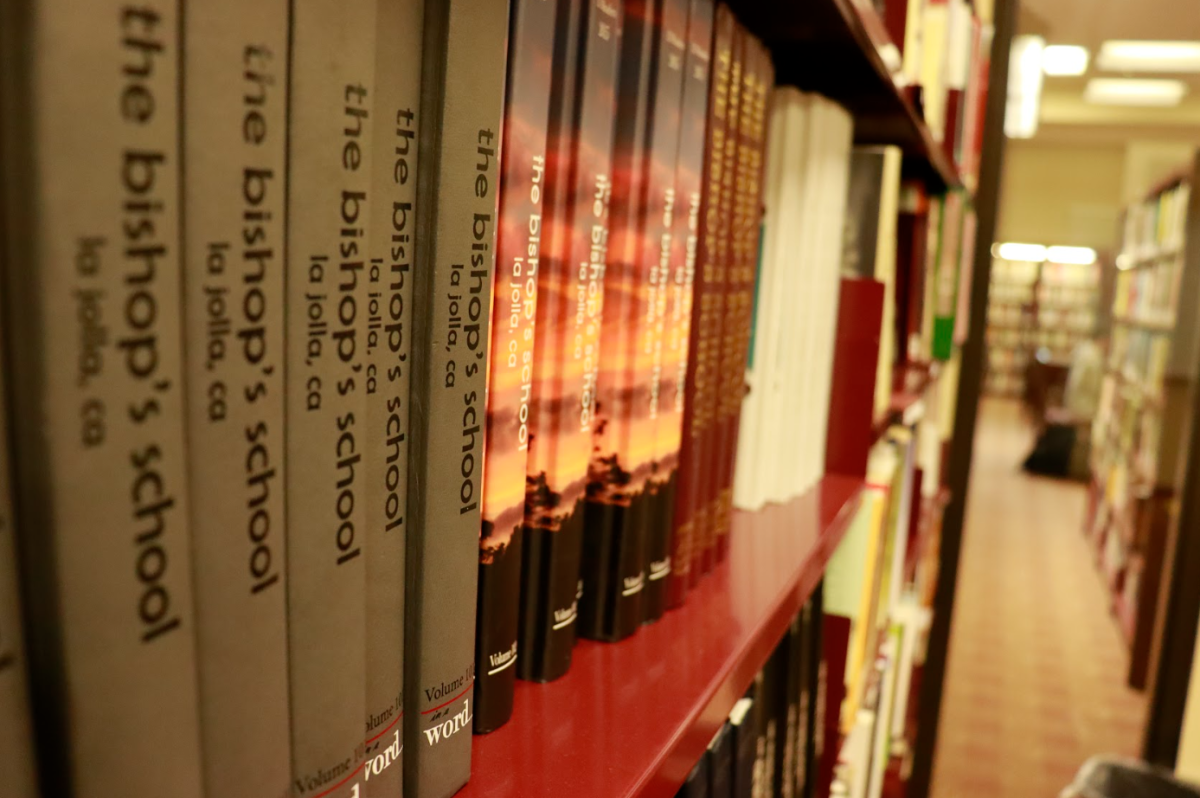


$70. That’s the price of a single Modern World History (MWH) reader. Students need to get an additional reader for the second semester: that’s $140 for the school year. Other history textbooks may sell for cheaper prices on sites like Walmart, which sells the U.S. History textbook, Give Me Liberty by Eric Foner for $28 for a new hardcopy version. But students who chose to use sites like Amazon to buy their books also won’t find the MWH reader on any such site because the reader is a custom collection made by Bishop’s teachers — meaning the only way to buy it is from the bookstore.
We’ve all had countless times where the piece of paper gets passed around the room, asking us to sign for a book. But behind the price tag, there’s an ongoing quarrel between the administration and the Modern World History department.
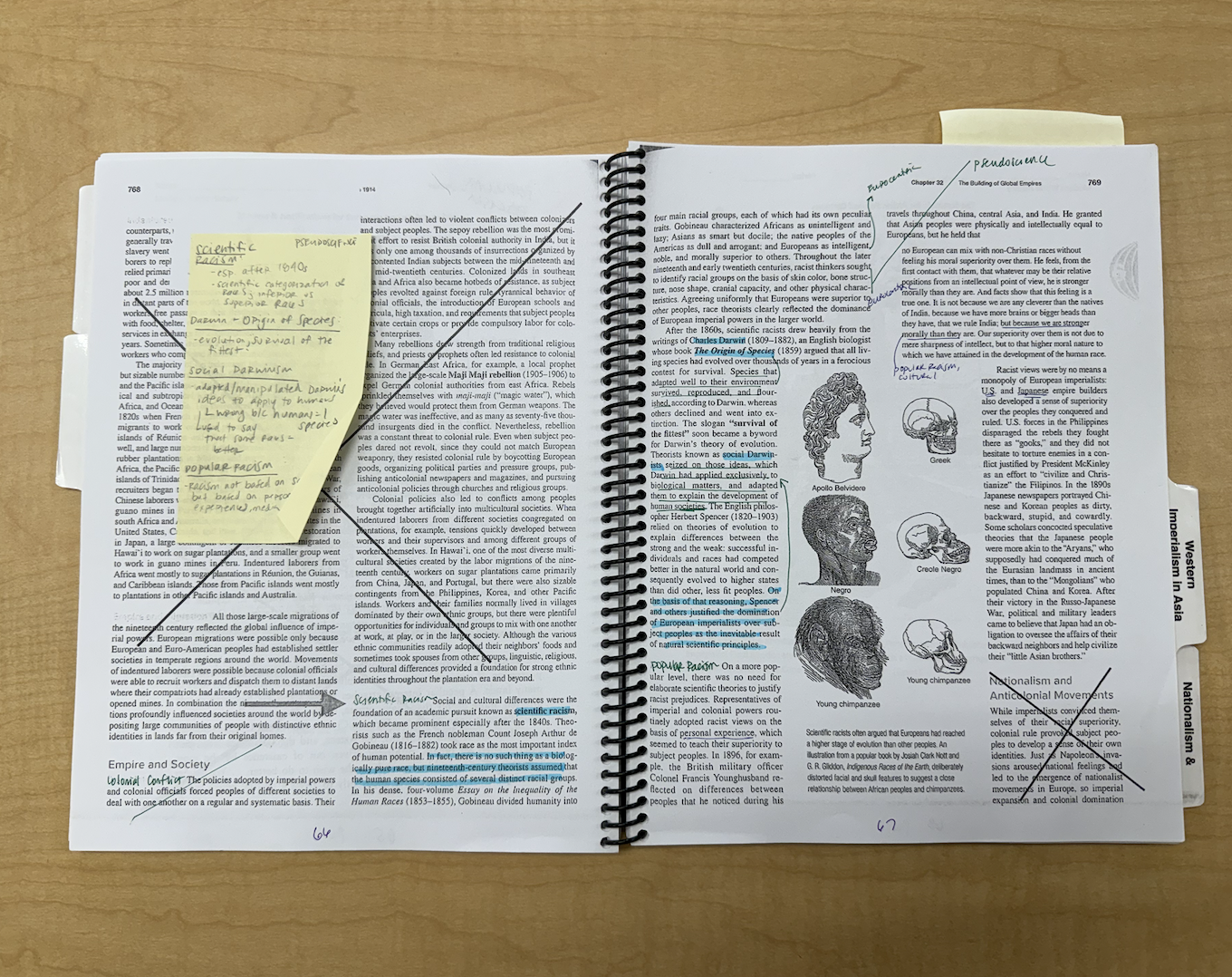
There is a big difference between MWH readers and any other textbook Bishop’s students will come across in their careers. As History and Social Science’s teacher Ms. Abby Perelman put it, “We require students to heavily annotate readers, and we change the readings each year. We add things, we subtract things.” The textbook is largely created by the MWH team themselves. While most books come directly from independent authors — like Give Me Liberty — multiple sources are compiled in the MWH reader from a plethora of different textbooks.
In fact, the MWH department actually had a textbook, Traditions & Encounters: A Global Perspective on the Past, but switched to a reader three years ago. This was partially to create a resource tailored to the course itself with more adaptability to the Bishop’s curriculum, but also largely due to the team’s concern for affordability and utility, according to Ms. Emily Smith, History and Social Sciences Teacher. This textbook cost $27 used and $67 new on Abebooks, a book selling platform.
The materials are hand-picked by teachers, who select them based on learning goals and their usefulness to the course. Ms. Perelman explained, “We curate the readings from a variety of different sources, textbooks, secondary sources, primary sources, current events sources, that we intentionally adjust based on the reading level over the course of the year.”
The new approach offers the team flexibility to adapt and to create a course that is more tailored to the Bishop’s curriculum. But since the textbook is curated by the MWH department, it also comes with flexibility in pricing. The bookstore sells the MWH readers for $70, the price offered by Ms. Erin Saldaña, Director of the Bookstore and Faculty Substitutes. This leaves the school with a hefty profit margin — and the MWH team argues that it should not be the case.
“This is an essential academic need. And it’s not a luxury,” Ms. Perelman pointed out. According to Printivity, a local printing source, the approximate printing cost of a booklet similar to the reader is about $20. That’s approximately $50 profit for every book sold. With such a high price, this raises the question: where is the money going?
Profits from the bookstore play a vital role in keeping the school functioning. Mr. Brian Ogden, Assistant Head of School for Curriculum & Academics and now MWH teacher too, said, “Our bookstore operates with a standard markup to cover operating expenses, specifically, things like staffing, inventory management, and overhead. The School has to cover those expenses, and that’s why some items in the bookstore are marked up above cost.”
“Tuition only covers about 80% of what it actually costs to educate students,” said Ms. Cathy Morrison, Director of Marketing and Communications, “So philanthropy makes up nearly all of the remaining 20 percent, and auxiliary income, which occasionally includes the bookstore, covers the costs of funding the school.”
Despite these administrative explanations, MWH teachers like Ms. Smith and Ms. Perelman continue to question the ethics and affordability of the bookstore’s markup.
“Buying the readers. That’s not a choice. If you want to buy a hoodie or a blanket or something from the bookstore, that’s a choice,” said Ms. Smith. For other textbooks, students have options, she said, “We tell the Honors Psychology students to buy them online because it’s a lot cheaper online. But the readers, you can’t buy those online.”
“It’s annoying how Bishop’s overpriced the MWH reader,” said Evelyn Fu (‘29), a MWH student. “But honestly, between utility and the price, I’m willing to pay the price because you really need the reader for the course,” she admitted. Students recognize the markup, but without an alternative, there isn’t much to do other than buy the textbook from the bookstore.
“The fight has been an ongoing war,” exclaimed Ms. Smith. While the change to a reader was meant to bring down prices for students, this ultimately did not solve the markup problem: “We didn’t learn until afterwards that [the school] was up-charging on the readers,” she recalled.
The debate is still occurring, and it seems like a compromise is unlikely to happen soon. Ms. Morrison explained, “I know the faculty brought their concerns. Things need to be reviewed before they can be passed. Budgeting changes — they’re not things that are quick. We’re already underway for the budget this year, so whenever any changes that might take place, that wouldn’t happen instantaneously.”
Ultimately, it is hard for the administration to find an equilibrium between both sides of the argument. Mr. Ogden asked that we “trust that the School is always trying to balance affordability with educational quality, and that includes supporting departments that put time and care into developing resources for students.”
Regardless, MWH teachers are still optimistic about achieving their goals. “Any reform is fine. We’re not saying to cancel the markup. But reducing the prices of the textbook is our main priority for students,” expressed Ms. Smith.