

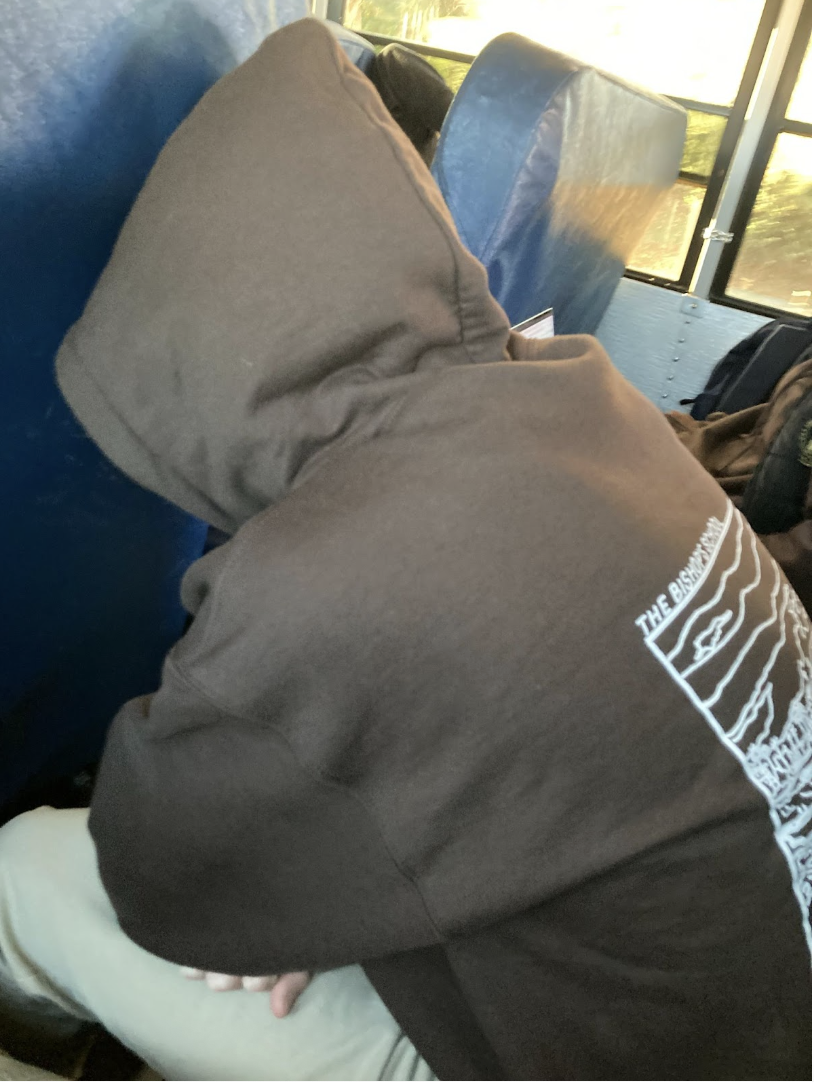
It is not uncommon to see groggy students blankly staring at the whiteboard, drowsily sipping a latte at their desk, eye bags bulging during the first class of a Bishop’s day. In fact, you have probably been this student. Why? Because you only got six hours of sleep last night. Or maybe five. Four? Three?
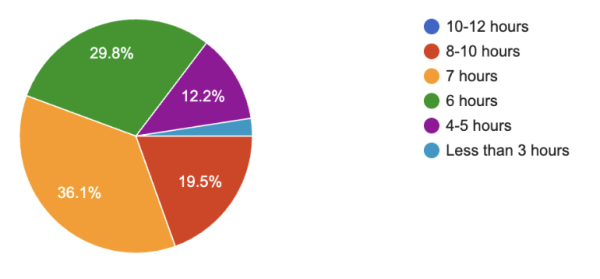
According to the National Sleep Foundation, teens should attain between eight and 10, sometimes 11 hours of sleep in order to “meet the demands of their growth and development”. In a student survey sent out by The Tower, which collected over 200 responses, over two-thirds of respondents said they don’t think they receive enough sleep, while 81% responded that they get under eight hours. Specifically, 36% reported they secure seven hours, 14% said they get six, and 12% obtain four to five. No one said they get more than 10.
But we are not alone. In spite of the National Sleep Foundation’s recommendation, “less than 2 out of 10 teens report getting the NSF’s recommended 8-10 hours of sleep on both school days and weekends,” evidence that the sleep malady grips not only our Knights but a larger group of teenagers.
The chronic lack of sleep among high school students raises deeper questions about workload, time management, and achievement culture at our school and across the country. Through examining student experiences, faculty insight, and national data, it becomes clear how Bishop’s fits into a wider crisis of teen sleep deprivation.
Anna Kaminsky (‘28) struggles to go to sleep early, her estimation of nightly slumber being five to six hours, well under the recommended number. Anna is a member of Performance Dance Group (PDG) and an independent team outside of school, and these practices can run as late as 9:15 p.m. Once she gets home — usually well after 10 p.m. — she still has the task of homework before her, explaining that “when I’m tired, I can’t read straight. It just never works out,” she concluded. Despite being “pretty dialed in,” she said, her homework will push her sleep back, usually past 1 a.m.
An intensive dance schedule combined with heavy loads of school work proves to be a significant obstacle to getting into bed at a decent time, and often comes at the sacrifice of a healthy amount of sleep for Anna. “In the moment, I might want to go to bed, but in the morning when I wake up, I’m not going to care that I got two hours of sleep, rather than the fact that I got my work done,” she said.
Many other students face similarly stressful concerns, athletic or otherwise. Ryan Shi (‘26) described Bishop’s as a “tough school,” though he thinks “they’re very understanding of the demanding nature of the curriculum” through policies like well-being days and blocks. Understanding or not, being a student at Bishop’s is no easy task, but Ryan has found that the key to balancing his academic progress with maintaining a good sleep schedule (or at least attempting to) is “time management.”
“I feel like my time management has drastically improved because I need to fit so much more into less time,” Ryan finished in a perhaps fittingly hastened manner before rushing off to his next class.
While time management seems a simple solution, distractions add a layer of complication. Charlie Fredberg (‘27) relates his own difficulties with getting enough sleep. “[In] today’s day and age, it can be so easy to get sucked into your phone and become just engulfed in TikTok or Instagram,” he admitted. This summary is not only emblematic of many Bishop’s students’ situations, but of the whole nation. Teens are spending increasing amounts of time on their devices and social media. An article by the American Psychological Association published in 2024 reported that, on average, teens spend 4.8 hours daily on social media, underpinning Charlie’s web woes.
The issues are clear, but what are the effects? Sleep is a vital aspect of your mental and physical health. The Centers for Disease Control and Prevention (CDC) encourages good sleep habits, as they can reduce stress and risk for chronic diseases, and increase mood, heart health, and metabolism. School Nurse Ms. Susie Fournier reported that two to three students typically come to her office to rest during their free periods because of headaches and lack of sleep from the night before. Ms. Fournier added, “Bishop’s students might be aware they should be getting eight hours of sleep at night, but are probably not getting it due to homework demands, athletics, outside activities, and phone use.”

(Adam Jaimovich)
Mr. David Mills, an Associate Director of College Counseling, provided his own advice, especially for seniors who are losing sleep over the application process. “You can’t do an essay in one draft. You can’t do your full application in one draft,” he said. The “chipping away” strategy of dividing your workload into 20 and 30-minute work periods “makes such a huge difference in managing your college applications and getting enough sleep,” he finished.
A select few students, however, have harnessed the ability to do what many others couldn’t. Neil Koura (‘28) goes to sleep at the same time almost every night and gets eight and a half hours of sleep. Neil is on the Boys’ Varsity Basketball team and has practice every day. Even so, he obtains an admirable amount of sleep by scheduling his day out in 30-minute blocks every morning “to make sure I don’t get lost or fall behind.” Neil’s strict adherence to his schedule enables him to be in bed promptly at 9:30 p.m., and he highlighted another crucial aspect of his efficiency. “I don’t really tend to get on my phone or scroll. I usually just go straight into homework,” he said, a feat simple in theory, but as Charlie already professed, much harder in practice.
Neil isn’t the only person to achieve this sought-after sleep schedule. Beckett Langager (‘29) gets an average of nine and a half hours of sleep by stopping his homework 30 minutes before he goes to bed. “Then, if it gets to be too late, I just do my homework in the morning,” he said.
Though aspirational, these stories are more individual than representative. Nonetheless, maybe the routines and habits of these lucky few can serve as templates for other students seeking to improve their sleep.
The absence of sleep experienced by a majority on campus is not a novel phenomenon in the country. What appears to be the unique result of Bishop’s taxing curriculum is actually a nationwide epidemic that harms the health of millions of high schoolers. In a 2021 poll, the CDC measured the number of high schoolers who get fewer than eight hours of sleep. It ranged from 74% to 84%, a scope strikingly similar to the estimation of Bishop’s students.
Perhaps due to a lack of discourse on the matter, the natural conclusion may be to assume that this is a recent trend; however, according to the same poll from the CDC, the percentage of students facing insufficient sleep has remained rather steady, with a slight increase since 2009.
Between grueling all-nighters and bleary-eyed early mornings, the desperate alarm alerting society to teen sleep deprivation has been ringing for quite some time now. The question remains: When will we wake up?