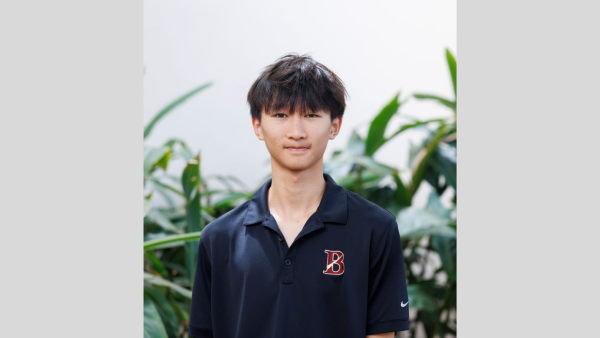

Aden Shin (‘28) did not like his advisory.
As a new freshman at Bishop’s last year, he walked into advisory — the daily morning check-in with a faculty member advisor and a small group of students — expecting to make new connections.
Advisory also includes longer well-being sessions, retreats, and Diversity, Equity, Inclusion, and Justice (DEIJ) and Health lessons. Aden hoped the advisory space would help him “build stronger connections with everyone… if not friendships.”
Unfortunately, that wasn’t how it felt.
“I felt pretty lonely,” Aden said. “I tried my hardest to get closer to my fellow advisees, but I did not see or feel any progress.” The group had divided itself into four clusters: three girls, three boys, two girls who later also switched, and then there was Aden.
“I just would not have been able to last another three years in an environment that I was not comfortable in,” Aden said. He didn’t think it was anyone’s fault, but explained, “My ex-advisees and I had varying personalities and interests.”
After the 10th grade retreat, he switched into a different advisory.
His former advisor, Science Teacher Ms. Bryn Bishop, understood Aden’s experience. “He made a genuine effort to find common ground with others,” she said. “I truly appreciated having him as part of our group… Sometimes groups just don’t click, and that’s okay.”
Aden is not the only student who has encountered something similar. His experience raises a question other students might wonder: What is advisory supposed to be — and is it working?
The 2025-2026 Bishop’s Student and Family Handbook barely addresses how advisories should operate. It notes “advisors… are available to assist students and families with social, emotional or general concerns” and families should “attempt to speak to a teacher/advisor before contacting a school administrator” if they have concerns.
According to Ms. Michelle Shea, Dean of Students, there is also “no written policy” regarding advisory switches, but the “general policy” is to wait at least a year and communicate with the current advisor before switching.
Beyond those brief guidelines, there is little about what the program should feel like to students, leaving its definitive purpose up to interpretation for advisories.
From the administrative standpoint, advisory plays a crucial role in student life.
According to data shared by Ms. Shea from the Authentic Connections survey this year, when asked about which adult(s) on campus students felt the “most likely to confide in” when facing a “personal or family problem,” 52% of students responded with their advisors.
“There was a period of time, a couple of years ago, when we talked about getting rid of morning advisory,” said Ms. Shea. “I was one of the people in the room who said ‘absolutely not.’” To her, advisory is crucial for emotional support. “It’s really, really important that the same person looks at the same 10 or 11 people in the eyes every day and notices if they’re off… In its best iteration, advisory is their little home away from home.”
Not everyone agrees. The “home” metaphor has its limits. “We are not your parents,” said Physics Teacher and 10th grade advisor Mr. Marcus Milling. “I’ve literally heard people say that as an advisor, you’re a parent — and I think that’s mixing things up.”
Aden’s opinion lies somewhere in between. “I think an advisory should consist of a group of people where everyone is somewhat comfortable with one another,” he said.
Mr. Milling also believes less “programming” — like DEIJ lessons and advisory activities — might serve students better. He acknowledged that students are busy and figured, “Advisory could be the one place where you just breathe and decompress instead of having to do something.”
Even with advisory activities, Mr. Milling thinks there is “almost no instruction” about what to do as an advisor. For DEIJ lessons, “there are things that people hand you: ‘Here’s a lesson. Teach it,’” he said. “I understand what [the DEIJ team] is intending in an overall sense, but with individual lessons I either don’t know what the point is, or I think the point is not well-supported.”
As a result, in Mr. Milling’s DEIJ advisory lessons, he creates a slideshow on a general topic related to the provided lesson, adding open-ended questions to inspire discussion afterward.
Mr. Milling remembered that 20 years ago, when he first came to Bishop’s, advisory was more “open-ended.” There were still chapels and class meetings, but advisory was about “coming in, having a snack, and hanging out,” in contrast to the abundance of scheduled activities today.
Now, Mr. Milling finds the purpose of advisories vague: “If you ask 10 people what the purpose of advisory is, you could get seven or eight different responses.”
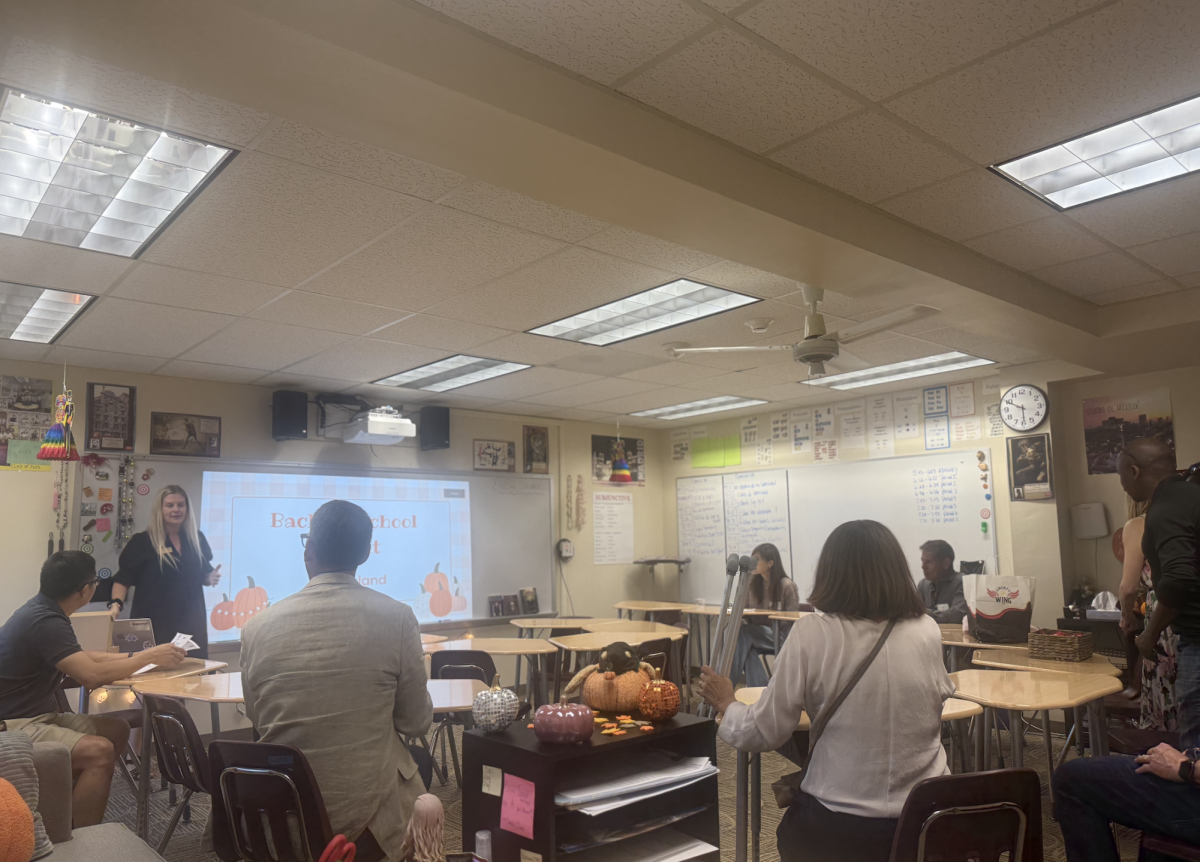
One such response came from Spanish Teacher Ms. Uhland, Class of 2028 Sponsor, and an advisor with over a decade of experience. She believes “it’s important that advisors make the effort to connect with advisees,” she said. “For example, if the leaders in a club aren’t willing to put in the effort, they shouldn’t expect the club members to do so.”
She admitted that advisors receive little formal training, but she makes herself available to meet with all new faculty advisors if they have questions about the advisory program.
As a class sponsor, she “serves as a resource for advisors and keeps an eye on student well-being.” Sponsors meet once per cycle to share ideas for advisory activities. “I do think there is a desire for a little bit more programming — not more DEIJ or health lessons, necessarily — but just more clarity about what advisory is,” she said.
For Ms. Uhland, the purpose of advisories is clear: “Advisory is our school family,” she said. “And just like the families you are born into, you don’t have a choice. You may not be friends with everyone, but you learn how to deal with people, respect differences, and grow together.”
Ms. Shea emphasized that it’s “extremely rare” for students to switch advisories: according to her, only 1.4% of upper-schoolers in the 2025-2026 year have switched. “Most of the time, it’s just about fit,” she explained. “They might wish their advisory decorated doors during Spirit Week together. It’s rarely that something’s wrong with the advisor — more that the group just doesn’t mesh.”
Mr. Mark Radley, who teaches English and advises 12th grade students, had six of his advisees switch into other advisories — views the current advisory program as both valuable and vulnerable. He believes that allowing students to switch out of advisories after 10th grade and to choose new ones they think are a better fit makes it “difficult to fully support student growth.”
He worried that allowing upperclassmen to change advisories too freely “risks undermining important lessons in adaptation, tolerance, and working through differences.”
Even when people switch for good reasons, Mr. Radley noted, “Leaving can unknowingly interrupt their stability and sense of belonging. It can be difficult for remaining students not to take it personally.”
And for students, that sense of belonging is a game-changer.
“I think advisory itself is a good concept,” said Yina Shate (‘26), who was in Mr. Radley’s advisory for three years before switching this year. “It’s a nice way of having a little family within your Bishop’s family.”
She thinks the ultimate purpose of advisories is for students to feel more at ease. “I absolutely adored Mr. Radley, and I loved the people in his advisory too, but for my senior year… I decided that I wanted a new group of people,” Yina shared. “I still go drop by Mr. Radley’s room to catch up.”
The Tower contacted several of the remaining Radley advisees, though none responded.
Other advisory groups have experienced challenges of their own. To get the full story, The Tower granted anonymity to three students to minimize the negative impact on an already struggling group. This student observed that their advisory “doesn’t really talk to each other that much. … [Our advisor] kind of just lets us leave early or doesn’t talk to us that much.” Advisory “has just been a place where I’d had to go every morning for five minutes and just sit there and be bored and then leave.”
Their advisory group has even talked to Ms. Shea about switching collectively this year, as confirmed by two other students in that advisory, but Ms. Shea said, “That’s not the mechanism we use. We do not replace an advisor from a group; we only allow students to move away as individuals.”
During the Christmas door-decorating contest last school year, the group felt especially aware of the differences between their advisory and others. “[Our advisor] told us we didn’t have to do it, even though we kind of wanted to,” they said.
They saw another advisory making gingerbread houses and playing music. “Seeing other people’s bonding definitely made us realize that we are not bonding enough,” they explained. “I feel like, to some extent, it’s also our problem — we don’t want to bond enough.”
Meanwhile, Abigail Wei (‘26) and Naveen Hernandez (‘26)’s advisory has thrived, despite challenges. The advisees have had three different advisors in four years, yet stayed very close.
“We joke that we’re ‘trauma-bonded’ and have the most lore,” Abigail said. “But I think we’ve had to rely more on each other since the one constant across the years has been us, not the adults.” Their group still carries on traditions from freshman year, such as a Mad Libs book they fill out together during free time. “At the end of the day, I think the advisees are more important than the advisor,” Abigail said. “For me, advisory is where I can step out of the academic mindset for a bit and connect with a small, consistent group of peers.”
Naveen agreed, remarking, “The point of these kinds of groups in high school is to find your support system … I think it’s good that it remains an option.”
Advisory may remain an option, but it’s still finding its footing — a home for some, a hollow routine for others.
Regardless, in advisory, the quest for connection continues.