

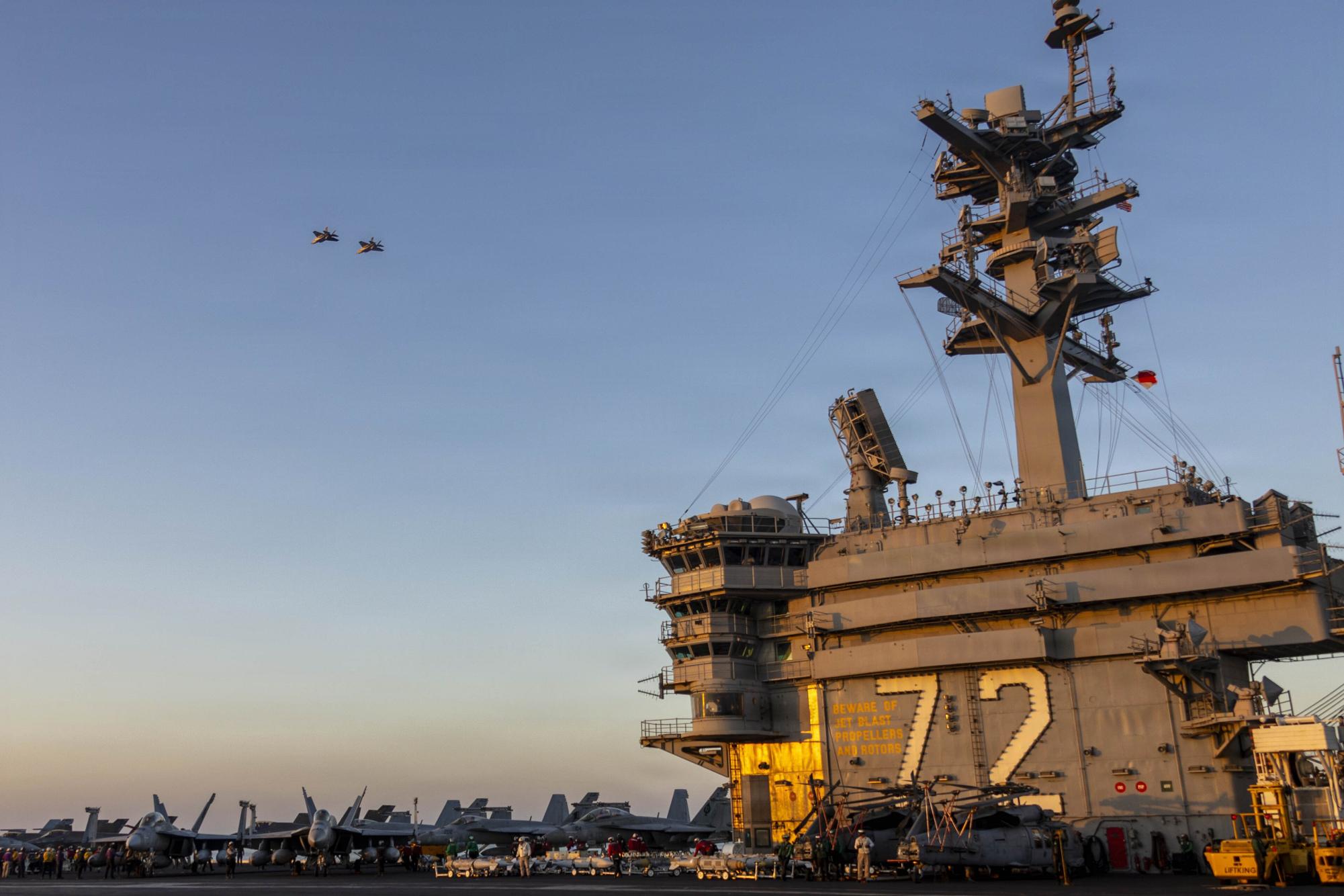
On February 28, 2026, the United States and Israel launched a major attack on Iran, with the first apparent strikes targeting Iranian government and military sites, according to PBS. The offices of Iran’s Supreme Leader, Ayatollah Ali Khamenei, were also struck, as President Donald Trump urged the Iranian people to “take back” their country in a televised announcement shortly after the attack began.
Iran swiftly responded by launching missiles and drone attacks toward Israeli and U.S. military bases across the region, with the Islamic Revolutionary Guard Corps (IRGC) striking the U.S. Fifth Fleet in Bahrain, bases in Qatar, and the United Arab Emirates (UAE), per The New York Times. The IRGC also launched strikes into Israel, including an attack that killed nine in the city of Beit Shemesh.
The escalation arose after tensions that had been steadily building for months. For weeks prior, the U.S. and Iran were engaged in nuclear talks brokered through Omani officials, as Oman has long been recognized as a trusted, neutral mediator. Negotiations had made what Omani Foreign Minister Badr Albusaidi described as “significant progress,” just two days before the bombs started falling.
On June 22, 2025, months before the current conflict started, the U.S. had already demonstrated its willingness to strike. In an effort to stifle Iran’s nuclear enrichment program, the U.S. dropped 14 bunker-buster bombs on Iran’s most fortified nuclear sites at Fordow, Natanz, and Isfahan.
Inside Iran, the government faced grave internal problems of its own. Protests erupted in December 2025 after a collapse of the rial — the Iranian currency — which increased inflation and worsened living conditions. Pressures from the economic and political aftereffects of the June 2025 bombings also intensified. The regime responded swiftly with security forces firing and killing protestors, conducting arrests en masse, and cutting off internet access across the country, according to PBS.
Trump urged Iranians to keep protesting and posted to TruthSocial on January 13, “Iranian Patriots, KEEP PROTESTING – TAKE OVER YOUR INSTITUTIONS!!! … HELP IS ON ITS WAY.” No U.S. intervention materialized. The protests faded by mid-January, and the regime held.
Following the harshly repressed protests, on February 28 at 1:15 a.m., the US launched the initial strikes of Operation Epic Fury. They targeted Iran’s command-and-control structure, air defenses, missile sites, and naval assets in a large-scale decapitation and suppression campaign. The US framed the assault as a preemptive effort to eliminate Iran’s nuclear threat and degrade its broader military capacity.
Trump’s public remarks after the opening strikes made clear that Washington was viewing the conflict as much more than a limited repression strike, though. At a press conference on March 9, he said U.S. and Israeli forces had carried out “some of the most powerful and complex military strikes and maneuvers the world has ever seen,” and claimed the campaign was already “way ahead of schedule.”
The stakes of the conflict rose further as the 37-year reigning Supreme Leader Ayatollah Ali Khamenei was killed in the opening barrages on February 28. AP News reported that the first wave of strikes hit his compound in Tehran, killing the Supreme Leader alongside other senior Iranian officials.
The target list has since widened quickly. AP found that later strikes hit Revolutionary Guard and Basij positions, missile sites, naval assets, police headquarters, local police stations, and state television facilities. What began as an attempt to collapse the regime by decapitating its leadership became a broader attack on the institutions that allow the regime to effectively govern and repress.
For Iranian-Americans within the Bishop’s community with family still inside Iran, the war is not only felt in target lists and oil prices, but also by uncertainty and silence. Darius Ashrafi (‘27) was born and raised in Iran. When calling his grandparents in Tehran, he noted that they had not sounded panicked, but that deeper fear came when communication disappeared. “Whenever war happens [in Iran], the Internet is shut down,” he said. “So we can’t communicate with them. We don’t know what’s happening.” Iran has often restricted or shut down internet access during times of conflict or internal unrest.
He also found Khamenei’s death shocking. He noted that previously, “it seemed like he was unkillable.” The regime’s survival afterward showed that dismantling it would take more than air power alone, presenting what Darius believes to be the two options forward: “It’s either the people must uprise or boots on the ground.” According to the Center for Strategic and International Studies, both paths carry serious risks. Experts have warned that even if Iranians rose, the regime retains the guns and has shown willingness to kill tens of thousands of its own people to stay in power, while a ground intervention risks the kind of open-ended entanglement that has defined U.S. failures in Iraq and Afghanistan.
Regardless of the status of the regime, the civilian casualty toll has continued to rise. As of March 21, PBS reported that an Iranian government agency put the death toll at roughly 1,500 people.
Reuters also reported that one strike on a school in southeastern Iran killed more than 160 people, most of them children, according to Iranian state media. Even if the exact figures remain hard to verify, it’s clear to see that civilians are bearing the growing brunt of the conflict.
Trump initially denied US involvement, blaming Iran for the attack and claiming the strike was carried out by Iran due to their inaccurate munitions, while later saying he simply did not know the details. However, a preliminary Department of War investigation found that the US military was behind the strike, a conclusion supported by independent analyses identifying a Tomahawk missile — a weapon Iran does not possess — as the munition used.
While it continues to fight domestically, Iran’s retaliation has also widened the conflict well beyond just Israel. AP reported attacks affecting Bahrain, Kuwait, Qatar, Saudi Arabia, and the United Arab Emirates. Those strikes have hit not only U.S. military and diplomatic sites, but also airports, ports, hotels, and residential areas.
The war is now reaching the civilian infrastructure of the Gulf, which helps explain why regional governments, such as Qatar, Bahrain, and the UAE, have paired defensive action, such as shooting down Iranian missiles, with repeated calls for de-escalation.
Europe’s response to this conflict has been shaped by previous American wars in the Middle East. During those conflicts, European governments often supported U.S. intervention. Later, they had to deal with the consequences, including economic instability, migration pressures, energy shocks, and political backlash at home.
As of now, Spain has refused to back the assault, with Prime Minister Pedro Sanchez referencing past failures in Iraq, while Germany has warned against the collapse of the Iranian state. That caution reflects a broader fear that another U.S.-aligned war in the region could again send instability throughout Europe.
No issue captures those wider stakes better than the crux of the Middle Eastern oil trade: the Strait of Hormuz. The International Energy Agency says about 20 million barrels per day of crude oil and oil products moved through the strait in 2025, along with nearly 20%of global liquefied natural gas (LNG) trade. Because alternative routes from the region are limited, even a partial disruption becomes an immediate global economic shock.
However, Iran has declared the strait closed and claimed that any ship attempting to pass through the strait will be fired upon. This prompted shipping through Hormuz to plummet by 97%, and caused a grinding halt in oil exports from the region. While the U.S. has explored the idea of granting escorts for ships passing through the Hormuz, as of March 10, the Navy’s stance is that it is not feasible to do so.
Iran’s pressure on global energy markets is just one dimension of its strategy for decentralized resistance, which has been built over decades via a network of armed proxy forces across the region.
For nearly 4 decades, Iran has funded and directed a network of proxy forces across the Middle East, including Hezbollah in Lebanon, Hamas in Gaza, and the Houthis in Yemen. Collectively, they have been dubbed the “Axis of Resistance,” serving as Iran’s primary means of projecting power and maintaining opposition to Western and Israeli influence.
After the most recent conflicts that began with the October 7, 2023, Hamas attacks, Iran’s proxy system throughout the region has been significantly degraded. Israel’s current campaign in Lebanon decimated Hezbollah’s military capabilities, its war in Gaza reduced Hamas’s capabilities as a fighting force, and the fall of the Assad regime in Syria disrupted Iranian supply lines to both groups.
As the conflict has expanded beyond Iran’s borders, Israel is simultaneously escalating its campaign in Lebanon, launching strikes across the south and east in an effort to target Hezbollah positions. As the war approached its second week, nearly 700,000 people had been displaced in Lebanon, according to the United Nations.
Although the strikes have been focused on military and economic targets, they have also impacted Iran’s top leadership.
With Ayatollah Ali Khamenei killed on the opening day of strikes, Iran faced a succession process, occurring for the first time since Ali Khamenei himself was named to replace Ayatollah Khomeini in 1989. Trump claimed the operation had eliminated Iran’s leadership structure, leaving no viable path forward for the regime. A temporary three-person council, comprising President Masoud Pezeshkian, judiciary chief Gholam-Hossein Mohseni Ejei, and senior cleric Alireza Arafi, assumed power for 8 days in the meantime.
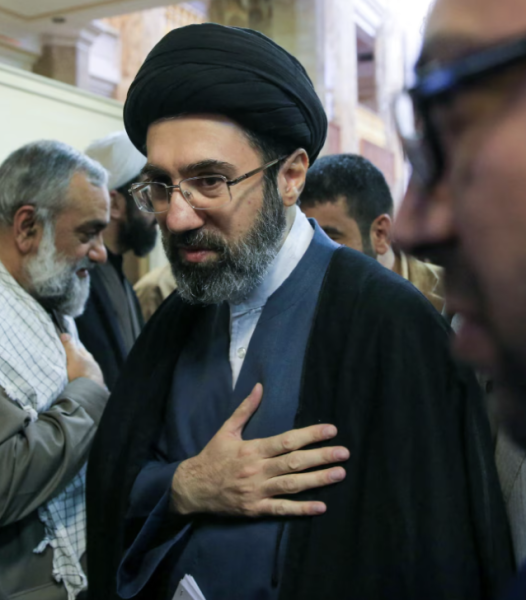
On March 8, Iran’s Assembly of Experts picked Mojtaba Khamenei, the late supreme leader’s son, as Iran’s third supreme leader, with the IRGC and armed forces quickly pledging their support, per the Institute for Applied Geopolitics. Trump called the selection “unacceptable,” and said the new leader would need U.S. approval to survive. Israel’s military reiterated its threat to pursue any successor. After the selection was confirmed, Trump said he was “not happy” and stated that the new Supreme Leader may not last.
The conflict has continued to expand, with fighting and strikes now affecting Tehran, Beirut, Gulf airports, ports, hotels, and key shipping lanes. Civilian casualties have continued to rise, while each new round of attacks has added to the war’s broader economic fallout.
U.S. and Israeli officials have publicly framed their campaign around degrading Iran’s missile forces and nuclear program. But the focus on senior Iranian leadership targets, combined with Trump’s public rhetoric, has added to questions over whether the war’s objectives extend beyond deterrence and counterproliferation.
In terms of their stated objectives, the U.S. appears to have significantly degraded Iran’s missile and nuclear capabilities, but not eliminated them. AP reported that U.S. officials now say Iran’s missile and drone forces are “nearly neutralized,” while the International Atomic Energy Agency (IAEA) confirmed that access points to Natanz’s underground enrichment plant were bombed.
Reuters said Iran’s major enrichment facilities had already been heavily damaged. Still, Reuters also notes that more than 200 kilograms of Iran’s 60%-enriched uranium likely remain at Isfahan, so the program is most likely only disrupted rather than fully neutralized.
Whether those aims can be achieved remains unclear. For now, the conflict is widening faster than any emerging political resolution.