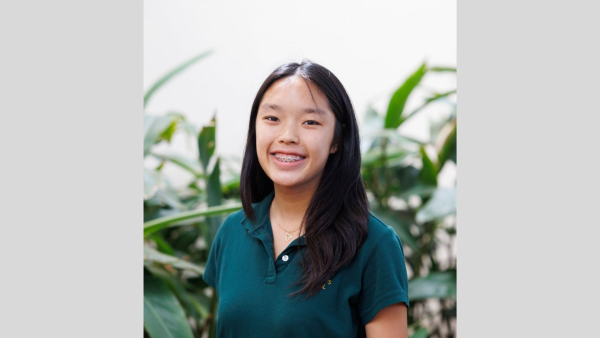

“I was super nervous going, and I hadn’t really had any lab research experience,” said Sydney Mafong (‘26) about going to Boston University’s Research in Science & Engineering (BU RISE) program. Now, after spending last summer there, she said, “100% I would recommend it.”
January to early March is the peak summer application season, and many students may be wondering how to spend those few months in a way that is both meaningful and enjoyable. For students interested in STEM or medicine, summer can offer opportunities to conduct research, build projects, explore new cities, or test out possible career paths beyond the classroom.
Below are several summer opportunities that Bishop’s students recommend, highlighting the kinds of research, hands-on work, and experiences future applicants can pursue.
Research-Based Programs:
For high-achieving students interested in real scientific research and mentorship from professionals in the field, programs like The Scripps Research Student Internship Program, Boston University’s Research in Science & Engineering (BU RISE) program, and the California State Summer School for Mathematics & Science (COSMOS) come highly recommended.
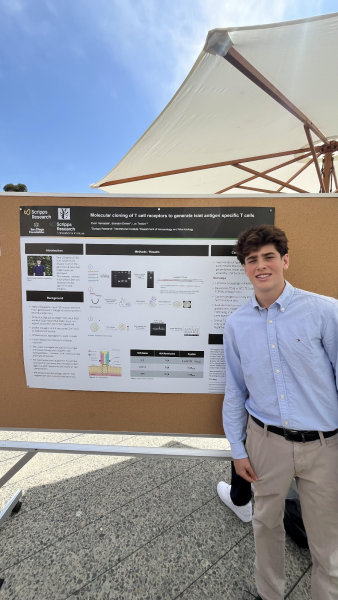
For local hands-on biomedical research, Evan Hamadeh’s (‘26) experience at The Scripps Research Student Internship Program provided a 10-week, in-depth look at lab work. Assigned to the Teyton lab (IMM), Evan explained his project “entailed cloning T-cell receptors to generate islet antigen-specific T-cells.”
This program has a highly competitive acceptance rate. According to Scripps Research, “The program promotes cutting-edge translational research… the primary goal is to equip students interested in health sciences, statistics, and computational/computer science to become future leaders in the realm of translational medical research.”
Evan spent his week attending faculty seminars and talks, participating in a book club, and, as he described, “the majority of my time cloning T-cell receptors, inserting them into various vectors, and spinfecting/transfecting to insert the receptor into human T-cells.”
He added, “I think it’s important to note that, like any new job, you will spend your first week learning and watching. I was initially really discouraged by this, because I thought it meant that my entire summer was going to be like that.” He explained that what he realized, though, is that the first week is critical for setting the tone for how the rest of the summer will go.
“After that first week, I was flung into my project, without a ton of guidance. I luckily had my notes from the first week to help me along the way. A lot of my work was trusting what I learned or saw,” said Evan. “I encourage every STEM-oriented student to apply to something like this—whether it’s Scripps, SALK, Sanford Burhan Presby, etc. It is a great opportunity to determine if research is something you would want to pursue.”
Across the country at Boston University, students are gaining a similar hands-on experience through BU RISE. It is a “research-focused STEM program for rising high school seniors to work closely with university researchers on a hands-on scientific project,” explained Kailin Xuan (‘26).
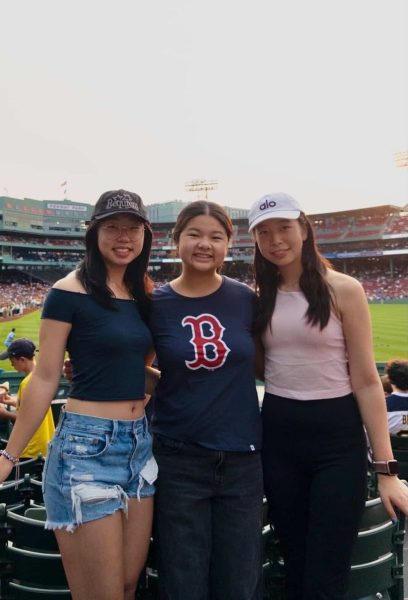
There are two tracks associated with BU RISE: the Practicum and the Internship track. The Practicum version provides a more structured, group-based research experience led by faculty and graduate students. The Internship track pairs students with BU faculty on active research projects in fields like biology, chemistry, neuroscience, and engineering, offering a hands-on and close mentorship experience.
Kailin, who did the Practicum version, spent six weeks working in computational neurobiology while conducting a novel research project. “During the application process, what stood out to me was the program’s emphasis on authentic curiosity. I appreciated being able to reflect on my past experiences, projects, and activities that connected to my research interests, since it made the application feel very personal and meaningful,” she said.
In the lab, Kailin “gained a clearer understanding of what research in computational neurobiology entails,” adding, “I would recommend it to other students who are curious about science and feel eager to experience hands-on research.”
Sydney Mafong (‘26), who participated in BU RISE’s internship track, was paired with a lab and a professor focusing on brain-focused biology in a wet lab environment. She highlighted the variety in planned activities on the weekend, describing Boston as a great location to be, along with the opportunity to work with people of different levels. She reflected, “Navigating a completely new city independently was so much fun, and I feel more confident in both my lab skills and problem-solving.”
Grace Yao (‘26) attended the California State Summer School for Mathematics & Science (COSMOS) at the University of California, Los Angeles (UCLA), where she participated in a four-week cluster called Medicine to Hollywood: AI for Speech & Imagery.
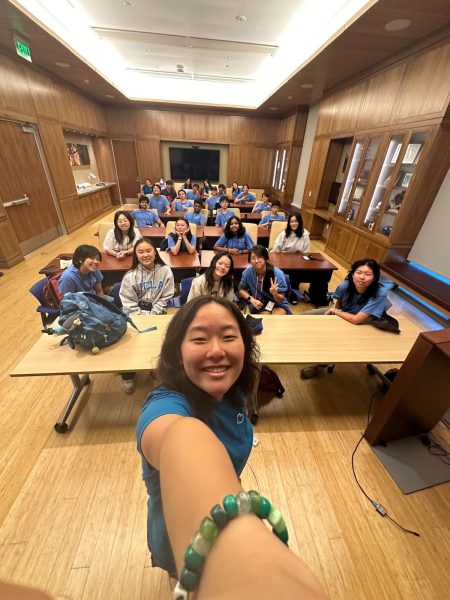
COSMOS is “an introductory program sponsored by several UC schools about a very wide variety of STEM topics, from chemistry to computer science to ecology, only for high-achieving students in California,” explained Grace.
The pre-college program is “intensive” and “for high school students who have demonstrated an aptitude for academic and professional careers in STEM,” explained COSMOS.
For Grace, her day was split between lectures by UCLA professors and hands-on lab work, focusing on a project using speech biomarkers to track Parkinson’s disease progression. “We spent our time reading related published research papers… building and training models… and implementing different improvement techniques with feedback from our TA, who was a PhD student of our UCLA professor,” she said.
“I wanted to learn the theory behind how humans and machines produce speech and recognize objects,” Grace explained. “I would definitely recommend it, especially for underclassmen, since a lot of full research programs are restricted to rising seniors.” She added how she was able to extend her project with one of her professors even after the program ended and present it at a research conference.
Nathan Hong (‘27), who attended COSMOS at UC Santa Cruz (UCSC), emphasized the program’s academic rigor during both the application process and during the program itself. He explained the application required “essays, resume, transcript, and teacher recommendations, similar to a college application.”
While his cluster focused on materials science, Nathan described the experience as “class heavy, with six hours of lectures and labs throughout the day, but with lots of free time and time to hang out with others and be active.” More specifically, Nathan noted there were “activities like casino night, kayaking, resume writing workshop, and field trips to other laboratories like at Berkeley,” adding, “The experience was very meaningful and worthwhile … Not only did I get to learn a lot about my specific field (material science), but I also got to make many friends … I would definitely recommend it to other students.”
Creative and Global Opportunities:
Not all STEM programs focus on traditional lab environments, though.
Jackson Weiser (‘26) attended Carnegie Mellon’s National High School Game Academy Pre-college program, where he learned how to make video games for six weeks. “For the first two weeks, we had typical college classes where I learned programming tactics and stuff, and also did some extra studies into music and sound effects.” During the third week, Jackson was challenged in teams to recreate a classic arcade game in what they called the “lightning round.”
He added, “I think that working in teams was honestly one of the best parts of the experience because it gave you experience as to what working in the field would look like… we were able to make our own original game, which we brainstormed, pitched, created, revised, and then presented.”
Unlike research-based programs that require competitive applications, Oxford Scholastica operates as a tuition-based academic enrichment program. However, students still complete structured coursework and subject-specific projects during their time abroad.

Dante Pilarowski (‘28) participated in the engineering-focused summer program. He explained, “I wanted to see something different from home, and I wanted to see if I would like living there.” Over his two-week program, he attended morning classes and spent afternoons exploring castles and small towns in England with international peers. “It’s a good opportunity for other students to discover which topics interest them for future jobs, and if studying abroad in England is something of interest!”
“Everyone is international, which is pretty cool, since the actual Oxford University program isn’t open to foreign passport holders,” explained Dante.
Across the programs students described, all of them said they applied out of genuine interest in what they would be doing. Whether that interest led them to try out research in a lab, creating video games, or exploring a new city or country, their experiences offer future students a clearer look at the range of STEM opportunities available.