
The numbers tell a stark story: 10 head coaching changes in a single National Football League (NFL) offseason, tying a record reached twice in just the past four seasons, as reported by NFL.
From the Buffalo Bills to the Tennessee Titans, first-year coaching experiments to lengthy, successful tenures, and everything in between, the 2025 season ended with a bloodbath: a myriad of firings spared neither struggling franchises nor perennial playoff contenders.
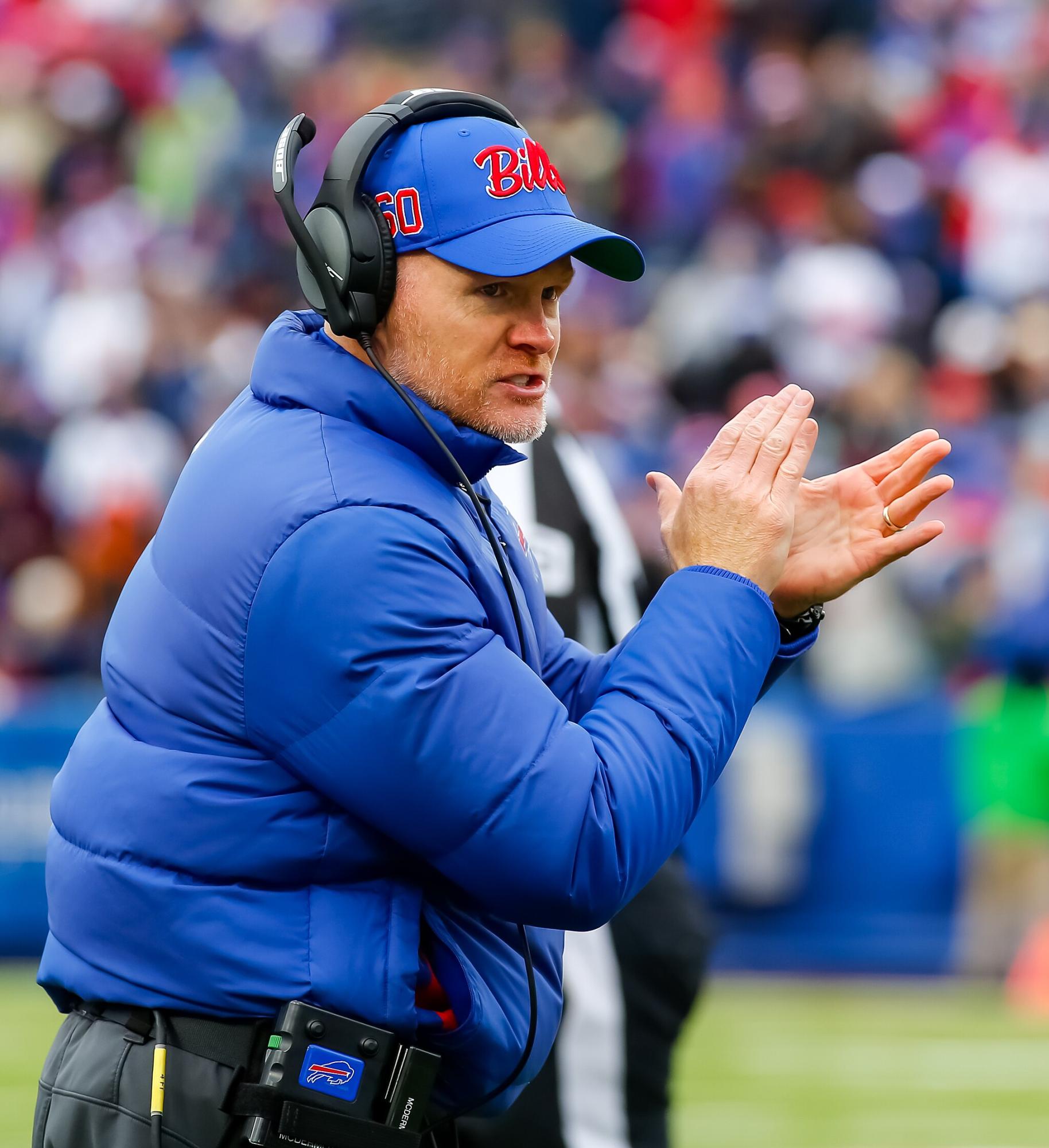
Sean McDermott guided the Buffalo Bills to the playoffs eight times in his nine-season tenure. John Harbaugh delivered the Baltimore Ravens a Super Bowl Championship in 2013, making the postseason a total of 12 times in 18 seasons. Both found themselves out of a job as the 2025-26 season came to a close.
The firings have ignited a familiar debate: are NFL teams too quick to fire, or is ruthless accountability simply a cost of competing at the highest level of professional football?
Sean McDermott’s dismissal epitomizes the league’s rapidly shifting standards. Before he arrived in 2017, Buffalo hadn’t made the playoffs since 1999. Under his leadership, the Bills became one of the NFL’s most consistent winners, with a nine-year regular-season total of 98 wins and 50 losses. McDermott also helped the Bills to reach the playoffs in seven consecutive seasons, from 2019 to 2026.
Yet, consistency without any championship to show for it proved to be insufficient. After an overtime playoff loss in the AFC Divisional game to the Denver Broncos, McDermott was out.
Theron Schutz (‘27), a devoted Bills fan, strongly believed that the firing was “absolutely not” fair. He pointed instead to Buffalo’s general manager Brandon Beane, arguing that he had failed to surround star quarterback Josh Allen “with enough weapons.” In his opinion, however, supporting Allen “had nothing to do with McDermott.”
Bishop’s Assistant Head Football Coach and avid Pittsburgh Steelers fan Kohl Simonds (‘12) agreed. “I always have a little more sympathy than the average fan for coaches who get fired, because I know how difficult coaching can be,” he explained. He agreed that “Buffalo’s GM [General Manager] Brandon Beane should’ve received more criticism for the Bills’ seemingly lackluster roster than McDermott did for their playoff loss.”
The debate over whether Allen’s prime years have been wasted by the coach or by the front office reflects a broader tension in how organizations distribute accountability. Coaches are usually judged on outcomes they can’t fully control, from draft picks to salary cap decisions, yet they sometimes bear the brunt of consequences when results fall short of high expectations.
However, the NFL coaching situation isn’t simply about high standards. According to Forbes, “Average NFL head-coach tenures have steadily declined over the past two decades.” Per ESPN, there have now been at least five head coaching changes in 16 consecutive seasons, a trend suggesting that patience itself has become a liability for NFL management.
Quick turnaround stories serve as examples of the prospect for bringing in fresh coaches, too. For example, Sean Payton transformed Denver from 5-12 to 14-3 in three years. Mike Vrabel flipped the New England Patriots from 4-13 to 14-3 with a Super Bowl appearance in his first season with the team. These instances raise expectations and shorten timelines for other organizations to maintain the competitive edge.
Most significantly, the drastic dip in the Kansas City Chiefs’ success this season removed a convenient front for coaches who have previously scapegoated the Chiefs’ dominance for their own playoff shortcomings.
Buffalo and Baltimore both possessed elite quarterbacks — Josh Allen and Lamar Jackson, respectively — and favorable playoff paths gave them lofty expectations. With the obstacle of overcoming Kansas City seemingly removed from the playoff path, both the Bills and the Ravens still failed to reach the Super Bowl this year, exposing deeper issues that organizations deemed required new leadership to address.
“It directly correlates with the fans’ desires for success and billionaire owners willing to do anything to win,” Coach Simonds observed, noting that the phenomenon extends beyond professional football into college sports as well.
If McDermott’s firing showed that long-term success seemingly offers little job security, Pete Carroll’s single season with the Las Vegas Raiders demonstrated that failure leaves even a slimmer margin for patience.
Previously, under his leadership for over 14 seasons with the Seattle Seahawks, Carroll went to the playoffs in 10 seasons and won the Seahawks their first Super Bowl in 2014, according to ESPN.
At 74 years old, Carroll became the oldest head coach in NFL history when the Raiders hired him. Twelve months later, after a 3-14 season with Las Vegas, he was gone as part of an organizational overhaul that also saw the team land the first overall pick in the upcoming 2026 NFL draft.
Should teams give coaches more than one year? Coach Simonds distinguished between situations, remarking that “If a coach inherits a really bad situation and shows improvements in year one or two, then yes, you absolutely should be given more time.” But Carroll’s Raiders showed little competitiveness throughout the season, making retaining him “a tough sell to fans.”
The counterargument, however, is that constant change can create its own problems. According to Forbes, from 2016 through 2025, 10 NFL teams won fewer than 45% of their games, and all 10 have undergone coaching changes in the past three years.
The New York Giants, Cleveland Browns, and Las Vegas Raiders have cycled through multiple regimes without escaping mediocrity, suggesting that poor personnel management won’t fix itself simply by replacing the person in charge of managing it.
Something often lost in the debate over fairness and accountability is the players themselves, who must navigate such instability while still playing at their best.
“I think continuity in anything, but especially sports, is important and can have effects on players,” Coach Simonds said. “Most of the all-time great quarterbacks had very little coaching turnover in their careers, which allowed them to master their respective offenses.”
Indeed, the league’s own data supports this trend. Total Quarterback Rating, or QBR, is a measure of a quarterback’s overall efficiency. It evaluates all of a quarterback’s contributions to winning, including passes, rushes, turnovers, and penalties, by measuring how each play changes a team’s expected points. Just 20 quarterbacks finished the 2025 regular season with a QBR above the average of 50, the lowest since 2016.
Playoff quarterbacks like Aaron Rodgers (Pittsburgh) and the 2025 first overall pick Cam Ward (Tennessee) both finished with QBRs below that threshold, raising questions over whether organizations are adequately developing young talent.
Yet, coaching changes have also proven to be beneficial for players within certain organizations. Chicago Bears quarterback Caleb Williams saw his QBR jump 15.0 points this year after Chicago hired Ben Johnson. Drake Maye’s QBR increased by a whopping 21.9 points following Mike Vrabel’s entry in New England.
The league appears to be embracing the philosophy that organizations fail young quarterbacks before young quarterbacks fail those organizations. A rookie quarterback’s struggles are mainly the result of a team’s inability to offer effective coaching, adequate support, and a stable system.
Theron expressed cautious optimism about Buffalo’s shocking transition from Sean McDermott. According to ESPN, the Bills’ Offensive Coordinator Joe Brady now assumes his position. Although Theron stated that he was “a big fan of Joe Brady,” he still believes that Brady is not “good enough to be our head coach.”
As 10 new coaches begin their tenures, each is facing different timelines and expectations. However, one certainty prevails: the clock is already ticking. Will they have enough time to build something sustainable, or will they simply become the next name on next year’s firing list? It may depend less on their actual performance, or it might prove to be solely reliant on factors entirely beyond their control.
In the modern NFL, it seems that patience isn’t just rare, but it’s a competitive disadvantage teams seem to no longer be able to afford.