
When walking onto a field, many athletes can feel the difference under their feet: turf is hot and hard, grass is cool and soft. The field – turf or grass – that athletes play on can change their performance and game mindset. From football to soccer, field hockey to lacrosse, many sports rely on an optimal surface for speed, safety, and performance.
Turf and grass each have benefits and drawbacks: turf fields are easy to maintain and durable, while real grass creates a cooler ground temperature and is considered safer for athletes, according to the Outreach and Education Branch of the University of Illinois. Most high schools, according Bishop’s Athletic Director Coach Paula Conway, including Bishop’s, use field turf for their athletes, but is this the best choice?
Turf offers consistency and durability, and stays playable in nearly all weather conditions, according to Coach Conway. Dane Larson (‘27), a football player who has spent many years on this field, said the surface makes a huge difference while playing. “It’s harder and flatter, which makes it easier to turn and cut,” he said.
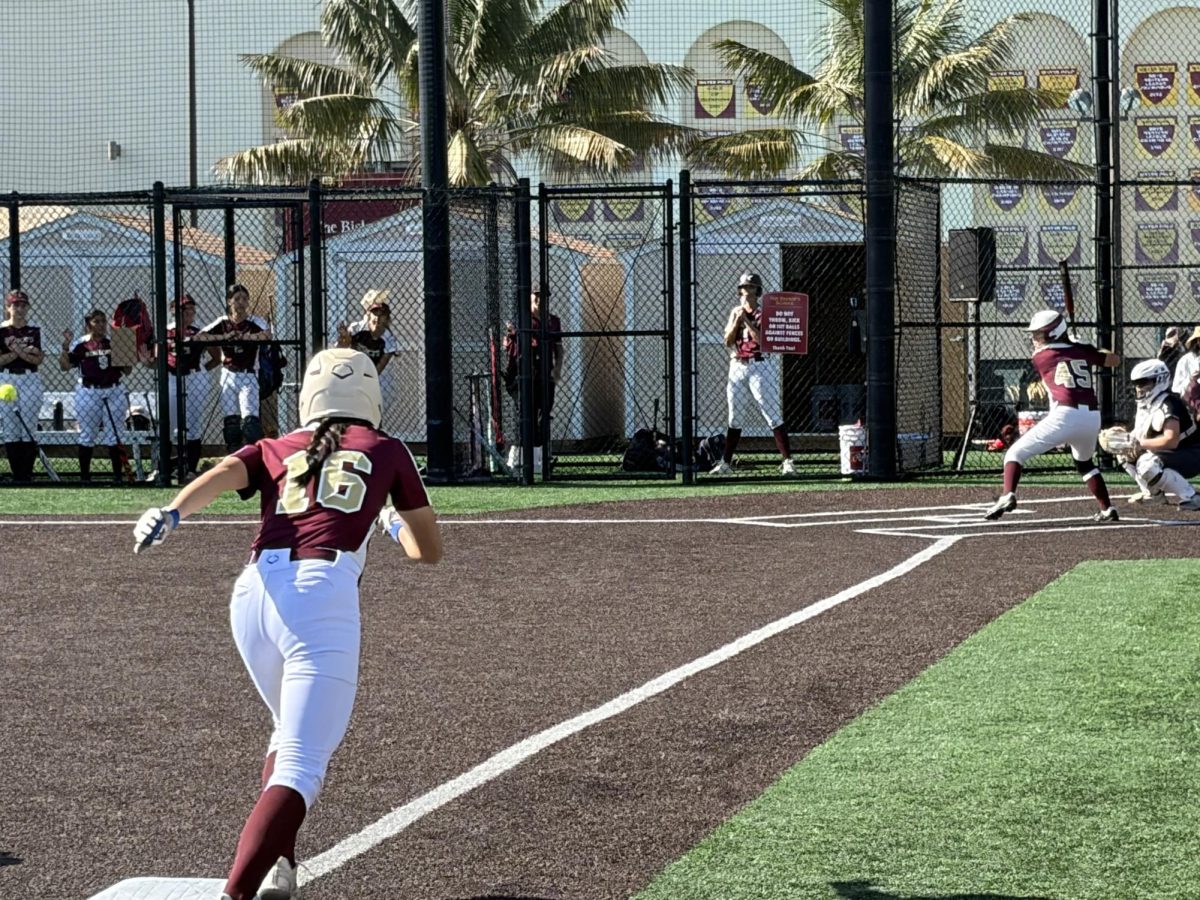
For multi-sport schools like Bishop’s, with such limited space, a reliable playing surface is necessary for supporting all athletes, according to Coach Conway. With different sports all sharing one field, turf makes maintaining the field easier. Coach Conway explained, “Football always trains in the [field’s] middle, and [with grass], that area would get completely torn up. By the end of the year, it would just be dirt. Turf allows us to keep the field usable for everyone without constant repair.”
But there are also drawbacks to turf — starting with how it handles heat. “The black pellets in the turf really absorb the sun,” Coach Conway said. “On a hot day, the field can be almost 10 degrees hotter than a grass surface. Some fields even need to be watered to cool them down.”
Studies support this concern. According to a study by Pennsylvania State University, artificial turf can get 20-60 degrees Fahrenheit hotter than natural grass because it’s made of heat-absorbing materials, so it can’t cool itself like natural grass does. This increases the risk of overheating and even burns for athletes during intense summer practices, said Coach Conway.
Also, the increase in athletes’ knee and ankle injuries, specifically ACL and MCL tears, is associated with playing on field turf, according to ESPN. Ryann Halsey (‘28), who plays soccer, has seen these injuries firsthand. She shared, “Falling [on turf] is also more painful, and turf burns are no fun.”
Coach Conway has also observed this pattern in injuries among student athletes. She said, “I’ve really noticed an uptick in ACL tears. Part of it might be the turf, but kids are also playing sports year-round and at higher levels, which adds to the risk.” Indeed, another study by Pennsylvania State University involving 10 high schools found that 20% of reported football injuries were directly related to turf fields and their field conditions, with knees and ankles being the highest places of risk.
Natural grass is a popular playing surface among athletes due to its comfort and safety. Marcos Montoya (‘27), another soccer player shared, “I feel more comfortable playing on grass. It’s softer on my feet and knees.”For soccer players like Marcos and Ryann, grass is their favorite. “With grass, you don’t take home turf pellets stuck in your shoes every day,” Ryann explained.

(Surf SD photographer)
However, grass also comes with its downsides. It requires regular maintenance, such as watering and mowing, which makes it hard to keep up with, especially when one field serves so many teams. According to data from Sports Venue Calculator, over the span of 10 years, natural grass can require between $18,000 to $44,000 in maintenance, whereas turf often requires between $6,000 to $10,000 depending on several factors. Facilities Director Mr. Brian Williams echoed this when he referenced how difficult it is to maintain Bishop’s natural grass quad and shared, “Having a beautiful quad like that is not cheap.” Maintaining a natural grass field could be even more expensive to keep in good condition compared to the quad because so many high-impact sports use it.
Although Bishop’s, being on the Californian coast, doesn’t experience extreme weather, a grass field can also quickly turn into mud in a rainstorm. Inconsistent weather makes the grass slippery and uneven for players, increasing their risk of injury. Coach Conway said, “Grass is great when [the weather is] really nice. But with so many sports using one field, it would wear out quickly.”
An ideal surface depends on what sport you’re playing. For field hockey, turf is essential because players need a completely flat and even surface, Field Hockey Player Lola Conway (‘28) echoed this by saying, “it’s a constant and flat surface, so there’s no weird bumps while playing.” On the other hand, soccer and football players like Marcos, Dane, and Ryann prefer grass for its natural feel and lower injury risk.

In the end, the choice between grass and turf comes down to balancing maintenance costs, performance, safety, and practicality. Turf and its characteristics make it a reasonable decision for Bishop’s right now. However, with increasing concerns about heat and athlete injuries, this conversation is far from over.
For now, Bishop’s will stick to turf, but as technology improves, new turf models are being designed to create the best space for various athletes. Although for the time being, coaches and players will continue to weigh out the pros and cons beneath their feet.