
“Israel and Netanyahu, blow this man’s car up, please, Netanyahu blow up his car.” On November 15, 2025, TikTok user lindaheartemoji posted the first instance of a “please Netanyahu” post, begging the Israeli Prime minister to deal with a trivial issue like traffic with military force. By February 2026, tens of thousands of similar posts had been made across all social media platforms, garnering tens of millions of likes, shares, and views; spawning hashtags such “#netanyahuplease;” and spiralling into an entire ecosystem of Benjamin Netanyahu related jokes such as “Big Yahu” and “Tel Aviv Impressed.”
All of this happened within around four months, a pace that turned a political figure into a social media joke so quickly that the meme stopped reading like commentary on conspiracies regarding Israel’s global influence, and instead started to shape how people online first encountered the premise.
With the advent of social media, political discourse in the United States is being rerouted through a format built for speed. A headline turns into a catchphrase, a clip becomes an edit, and a public figure’s image gets recut until it untethers from what they actually did. In the last few months, “Kirkification” face swaps, “Netanyahu please” appeals, and official government posts that read like meme accounts have pushed one paramount question: when people process politics as a running joke, what happens to the seriousness that democracy demands?
Honors U.S. History teacher Dr. Jeff Geoghegan issued a warning that memes can “encourage intellectual laziness or emotional distancing by framing serious issues as entertainment.” More importantly, he argued that “meme-driven content can oversimplify complex issues or spread misleading information with few immediate checks on its accuracy, especially for memes that go viral.” At the same time, he noted that memes can still offer “an entry point into political discourse that feels culturally natural and accessible to them.”
Social media’s reach is a key factor in why memes can have such an impact. In a 2025 study, the Pew Research Center reported that nearly half of U.S. teens say they are online “almost constantly,” with 96% indicating that they were “online daily.” Additionally, for young Americans, social and video networks represent their main entrance into engaging with political information. Reuters Institute data shows that in the United States, 54% of 18 to 24 year olds claim that social media and video networks are their main source of news.
Bishop’s teenagers specifically, though, garner their news through social media at a higher proportion than average, with 67.7% of respondents of The Tower’s media literacy poll indicating that they get their news by “scrolling videos/reels/etc on social media that catch my interest, regardless of the source.” It’s clear that the modern generation receives political information from the same medium that delivers entertainment.
Frequency is another significant aspect of memeification, which thrives on repetition and ambient exposure. In Pew’s teen platform fact sheet, many report daily use of the biggest youth platforms, with TikTok’s daily use at 57%, and YouTube’s daily use even higher at 90%. This pattern helps explain why political templates can become the default entry point for politics, before students even see formal reporting.

A similar pattern shows up in the “news influencer” ecosystem, where content creators upload posts specifically designed to grab attention while also delivering news. About one in five U.S. adults say they regularly get news from news influencers on social media. That number rises to 37% for ages 18 to 29. Politics is increasingly filtered through personality and shareability.
That optimization seeps into institutions that people look up to as official and truthful. In late January 2026, The Washington Post reported that the White House posted an altered image of civil rights attorney and anti-ICE protestor Nekima Levy Armstrong being arrested. They used AI to modify her expression from a neutral one into a tearful one. The post reached roughly 2.5 million views.
While individuals online may alter images in pursuit of clout or engagement, the White House operates under a different standard because its communications carry institutional authority. If it posts doctored images, the issue is not simply that it is participating in meme culture. The deeper problem is that it risks misleading the public while collapsing the distinction between using memes to promote a message and using a falsehood to create one. The fact that the White House posted it placed government communication inside the same attention economy that drives viral edits.
Associated Press coverage of the post framed it the same way: the White House had adopted meme distribution tactics that historically lived outside formal institutions, blurring norms about what official communication is supposed to look like.
The same logic is visible in the growing industry around influencer campaigns, where “going viral” is treated as a measurable and desirable outcome. In late 2025, a Foreign Agents Registration Act exhibit filed with the Department of Justice (DOJ) laid out an “(INT) Influencer Campaign (USD)” tied to Israel’s Ministry of Foreign Affairs. The campaign was designed to connect Israel to influencers with the objective of portraying the nation in a positive light to American viewers.
Early in 2026, The Wall Street Journal, reporting on the broader rise of paid political influencing, described how “corporate and foreign interests” are “pouring money” into getting pro-Trump social-media stars to push causes, and noted that “Israel made plans over the past year to spend $900,000 on an influencer campaign with a U.S. audience,” according to disclosure documents. Taken together, the filing’s production-style workplan and the Journal’s account of influencer lobbying read like the same model, designing public persuasion around content pipelines and online engagement.
That is the ecosystem in which the “Netanyahu please” wave exploded. Know Your Meme, an archive dedicated to tracking online trends, documented that the trend surged in late January and early February 2026, and noted that the most viral TikTok was posted on January 30 and received 14.4 million views and 1.8 million likes in under a month. The Times of Israel even noted that the “Netanyahu save me” phenomenon was garnering millions of views on TikTok, yet the clips are still “presumably ironic.”
The structure of the meme is absurd on purpose — a person begging a world leader to fix mundane problems — but the punchline leans on darker subtext. The meme explicitly riffs on conspiracy theories that frame Israel as secretly controlling outcomes in global affairs, which is part of why the joke can feel like more than a joke once it becomes commonplace. Even posted “ironically,” the format normalizes the conspiratorial premise as casual language.
Students notice that slippage. Darius Ashrafi (‘27) said, “I think they can harm serious discourse because they, in a way, make fun of and show prejudice to the people involved in them.” That concern lines up with how these trends travel. They move because they are funny, but they stick because they offer a simple narrative hook, and the hook is often built out of stereotypes and suspicion, making prejudice easier to circulate in the form of a reference rather than an argument.
Quantitative data further reinforces this narrative. Google Trends tracks how frequently people search particular terms and displays that interest on a 0–100 index, where 100 marks the highest of interest within the chosen timeframe. In that sense, the tool functions as a rough map of what language people reach for when a story breaks.
Over the past month in America, the index points toward meme vocabulary rising as formal political language falls: “Big Yahu,” a colloquial name for Benjamin Netanyahu closely tied with the “please netanyahu” meme, climbed from 0 to 84 by February 19 and peaked at 100 on February 16, while “Gaza ceasefire” dropped from 51 to 19 by February 19 after peaking at 100 on January 24.
“Kirkification” shows a different route to the same destination, where the meme template becomes a tool for dehumanization. The meme’s premise is a face swap that exaggerates features for comedic effect, which then gets layered into political arguments as a visual insult. Originating on September 23, “Kirkification” soon became a viral phenomenon. Users quickly began applying “Kirkification” to commonplace reaction images and spreading those through comments sections.
Even entire websites like kirkify.net were created for the sake of it. Soon, the joke spiralled into other forms of media, with the AI generated song “We are Charlie Kirk” by Spalexma spawning waves of remixes after reaching 6.6 million streams on spotify and having over 360,000 TikToks use it as an audio. Dropping a “kirkified” reaction image or remix is no longer just “making a joke.” Since it can frame someone as a punchline on sight, it replaces explanation with a shorthand that steers the thread of conversation before any real discourse about his political legacy and impact can even begin.
This trend has even outlasted its original source. Over the past year, Google Trends shows that both “Kirkification” and “Turning Point Usa” – a right-wing activist organization founded by Charlie Kirk — have seen a sharp rise and gradual decline. However, the former sat at 13 on February 19 while the latter was recorded at 1, despite both hitting 100 at their peaks, with “Turning Point Usa” spiking in early February and “Kirkification” peaking later in early November.
These numbers indicate that the contemporary image of Charlie Kirk is shaped more by Kirkification than his actual footprint on politics.
Tejas Gluth (‘28) described that tradeoff in moral terms, focusing on how humor can dull people’s reactions to real harm. “By using humor and irony,” he said, “and by leaning into absurd memes, we get away from the actual actions that have been committed.” The result, in his view, is a kind of comfort that arrives too easily.
Tejas further went on to note that memes can “give people more comfort in thinking about these horrible crimes,” even though he thinks it is “important to actually remain surprised,” and to keep enough seriousness to “actually discuss them.” When the meme becomes the first and last reference point, the conversation drifts, “drag[ging] away from actual important events.” That framing aligns with what researchers are increasingly measuring in platform dynamics, where emotionally charged, identity-signaling content tends to earn stronger engagement, nudging political talk toward sensationalization and away from context.
The deeper problem is that memeification is a style choice paired with an incentive structure. A 2024 peer reviewed study in Social Media and Society found that political memes can serve as a bridge between political cynicism and online political participation. This means the meme format can pull distrustful or politically unengaged users into political expression by making participation feel low-cost and culturally fluent, a dynamic that can scale cynicism rather than weaken it.
In a world of misinformation, that can sound positive, but it also means cynicism is not being challenged, rather it is being set as the norm. If the most shareable political language is sarcasm, dunking, and conspiratorial shorthand, then the content that scales with it will tend to carry those traits forward.
Platform-level data points in the same direction. A 2025 study conducted at Ohio State University analyzed tens of thousands of political TikTok videos and found that toxic, partisan content tended to attract more engagement than non-toxic content, helping explain why memeified conflict is such a stable product in feed-driven environments.
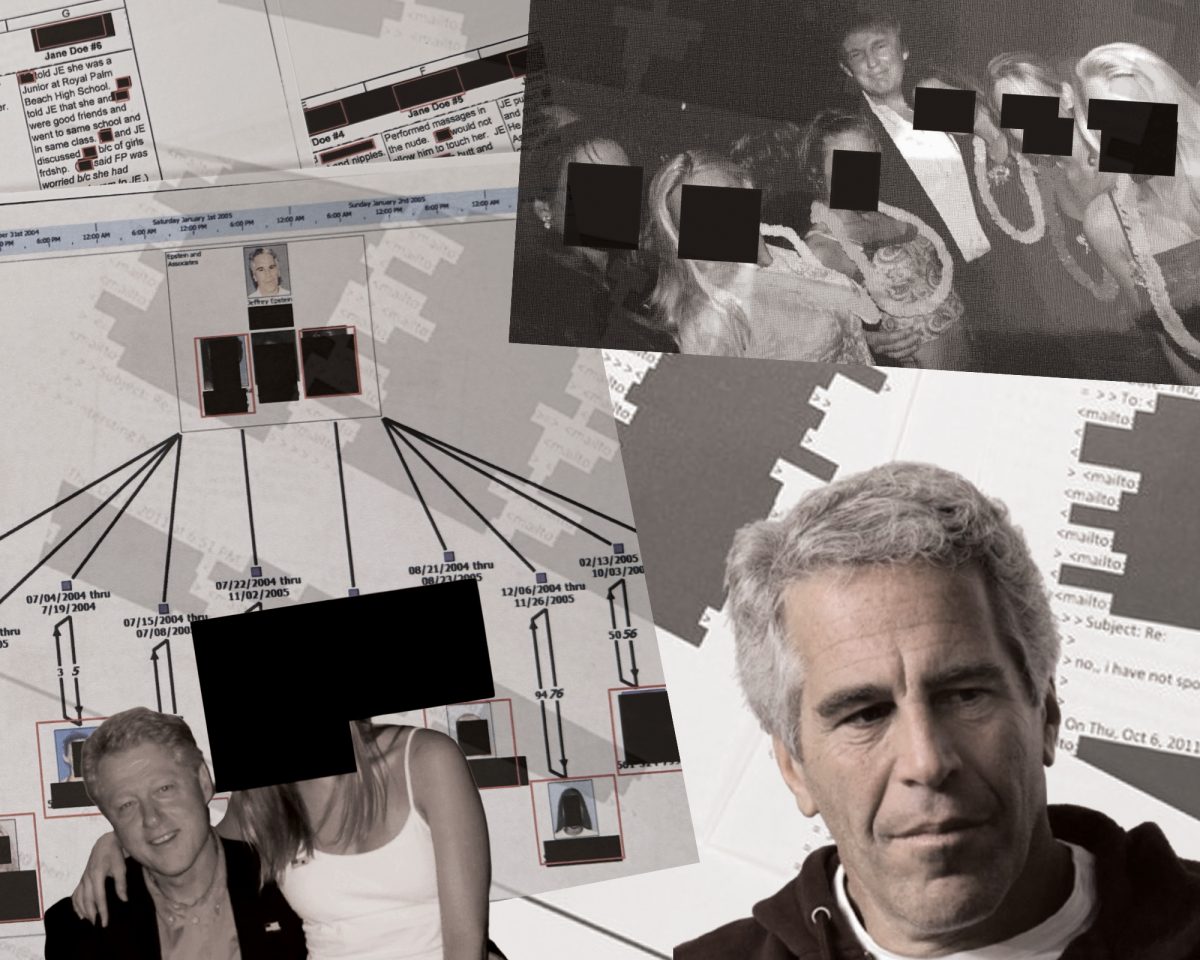
Conspiracy memes are where the stakes become clearest, because they blur into misinformation with almost no friction. Take the Epstein memes that spread through repetition until the “joke” and the “belief” begin to mix. A 2024 peer reviewed paper in Personality and Social Psychology Bulletin examined the “Epstein was murdered” rumor on X and looked at posts on X about the claim that “Epstein was murdered” and found that the rumor spread unevenly across political groups, with conservative classified users being “slightly more than twice as likely” to spread rumors about Epstein’s death than liberally classified users.
Even after the autopsy-based correction, the gap widened because liberals’ rumor-spreading dropped while conservatives’ rose sharply. Specifically, the paper reports liberals’ rumor-spreading decreased by about 28%, while conservatives’ rumor-spreading increased by about 2.7x, leaving conservatives responsible for about 7.7x as many rumor-spreading tweets as liberals in the post-correction period. These findings indicate that meme-friendly rumor can travel unevenly and resist correction in predictable ways.
Complementing the Personality and Social Psychology study, a 2021 Science Advances paper found that conservatives, on average, were more susceptible to certain kinds of political misperceptions, a result that matters less as a partisan accusation than as a warning about which narratives will face less resistance in some communities. Memeification turns conspiracy into a punchline, and the punchline can make fact-checking feel like a tonal mismatch instead of a necessary correction.
Despite partisan differences, Google Trends data shows the Epstein ecosystem’s meme phrasing pulling ahead of more literal search language as well. In the past month, “Big Stein,” again another colloquial name for Jeffrey Epstein closely tied with conspiracy memes, sat at 45 as of February 19, peaking near the top of the index around January 30 and February 3, while “Epstein client list” sat at 12 despite cresting at similar moments.
Altogether, the data points between Netanyahu, Kirk, and Epstein suggest memeification is not only about making politics funny. It is about which phrases become the easiest handles for attention, and which ones fade first; right now it’s looking like the genuine articles are fading faster than the online commentary.
None of this means humor has no place in politics. As Dr. Geoghegan puts it, “Expressing political opinions or social commentary through caricatures or cartoons has a long and illustrious history, going back hundreds, if not thousands, of years.” The shift is that memeification removes the thoughtful arguments behind satire, and now functions as the default packaging for these issues, especially on the platforms that have become primary news sources for younger audiences.
When this packaging becomes the selling point, the associated audience learns to treat politics as something to laugh at and move on, not something to understand. The cost is subtle at first. It shows up as a shorter attention span for context, a quicker jump to cynicism, and a discourse where the loudest, most flamboyant argument is shared the most. The more politics is consumed as meme currency, the more serious speech has to compete on entertainment’s terms, and that is a competition it rarely wins.