
On Sunday, December 14th, shortly after 5 p.m., a crowd gathered on Bondi Beach in Sydney, Australia, to celebrate the first day of Hanukkah, the Jewish holiday. The Chabad of Bondi, a Jewish community center, had organized a public celebration that featured a giant menorah lighting.
Jews and non-Jews alike dotted the shoreline, some engaging in religious activities, others simply enjoying the Sunday afternoon. Chabad posters read “Let’s fill Bondi with joy and light.”
Two hours later, 15 lay dead in the sand.
The Bondi Beach shooting has left the Jewish community grieving, but it was, alas, nothing new. It joins the long list of antisemitic attacks in what Eliana Leff (‘26), a group leader of the Jewish Student Association (JSA) at Bishop’s, described as a “very horrible past couple of years” for the Jewish community.
Zachary Haubenstock (‘28), another group leader of JSA, lamented, “I’m really disappointed, but I guess I can’t really be that surprised as to what’s going on.”
The attack confirms the persistence of violent antisemitism and its insidious presence in even so-called “progressive” societies. It is a reminder of the anti-Jewish sentiment that continues to plague other such countries. Exhibit A: The United States of America.
The U.S. Department of State defines antisemitism as “a certain perception of Jews, which may be expressed as hatred toward Jews.” That “certain perception” includes prejudice or stereotyping.
Jews make up a mere 2.4% of the American population, and yet they face the highest hate crime rates per capita, according to the New York Times. Even in a nation that has historically been the closest ally of Jews and Israel, antisemitism is rampant and expanding.
But why and how is antisemitism still so prevalent today? How has the persecution of such a small group persisted longer than most of the persecuting groups themselves, and somehow stubbornly adapted to fit modern society?
There are many reasons for what historians describe as “the oldest hate” — all of which took root centuries ago and have followed Jews ever since.
Jews have been accused of offenses ranging from killing Christ to spreading the Black Death, and ostensibly sabotaging Germany’s economy and military efforts in WWI, culminating in the deadliest systematic mass murder in human history: the Holocaust. Even during the Civil War, Jews were accused of conspiring with the other side in the United States.
History Teacher Ms. Abby Perelman, who teaches Modern World History that includes a section on the origins of antisemitism, explained that while “other societies have risen and fallen and disappeared, Jewish communities have persistently existed,” serving as a continuous and steady scapegoat, leading to repeated episodes of antisemitism. “It’s kind of a constant in history,” she said.
It is not only the longevity of a community that prompts such hostility, but also the size, or lack thereof. “The targeting of minorities has been a pervasive issue for the history of human civilization,” Mr. Matthew Valji, History Chair and the Faculty Advisor to the JSA, said. “And Jews,” with very brief exceptions, “have been a visible minority everywhere they lived.”
Currently in the U.S., one of the most common methods by which antisemitism spreads is through conspiratorial myths.
Political activist Nick Fuentes, who has over one million followers on X, promotes antisemitism daily. Fuentes has openly called Adolf Hitler “really f***ing cool” and propagated a myriad of classic antisemitic tropes online, such as the “Great Replacement Theory” that “Jews are running society,” and even claimed that the October 7th attacks on Israel, the deadliest day for Jews since the Holocaust, were “staged.”
This brand of antisemitism relies on century-old myths and conspiracies, now repackaged for the modern digital age, amplified by and thriving within cycling echo chambers online.
These myths represent a highly overt level of antisemitism, which can encourage that same prejudice among the followers of figures like Fuentes, and also inspire real-world hateful action.
According to a 2023 empirical report by The Combat Antisemitism Movement (CAM) and Network Contagion Research Institute (NCRI), online incitement against Jews correlates with real-world attacks, like vandalism. In 2023, “Synagogue of Satan,” a misused biblical term to justify antisemitism, circulated across social media, most notably X, and was often followed by calls for hateful action against synagogues, Jewish houses of worship.
During this period, vandalism on synagogues in the U.S. spiked, according to the report.
The modern reproduction of archaic antisemitic narratives connects to real, hateful action today. Clearly, our modern society is still not immune to irrational hostility.
The same conspiratorial antisemitic sentiments spread by Nick Fuentes and others online are actually held widely across America, though they are often less extreme and less openly advertised. Still, one in five Americans believes that Jews “hold too much power,” according to a survey conducted by the Anti-Defamation League (ADL).
Hearing these beliefs regularly raises an obvious question: Are they true?
“Power,” in the United States, is often interpreted as political. Said political influence rests firstly with the government and those who influence it. Six percent of Congress is Jewish, according to a survey by the Pew Research Center, and all members were elected by citizens of their state.
Another frequently cited source of supposed Jewish power is political spending and lobbying, or the practice of influencing governmental policy.
Political Action Committees (PACs) like the American Israel Public Affairs Committee (AIPAC) are indeed powerful, well-organized, single-issue lobbying groups. They are some of the strongest domestic foreign policy PACs in the U.S. Yet, they are not funded by foreign governments, much less all Jews around the world.
In stark contrast to the domestic lobbying sphere, under the Foreign Agents Registration Act (FARA), Israel’s direct foreign lobbying to U.S. politics has been outpaced in the last decade by at least nine countries, some of which include China, Japan, Saudi Arabia, and the United Arab Emirates, according to Open Secrets.
For context, all pro-Israel political spending in the 2024 cycle amounted to 110 million dollars, which accounted for 0.5% of the estimated 22 billion dollars of total political spending in the 2023-2024 cycle in the U.S. (4.4 billion of which came from federal lobbying, 15.5 billion from PAC spending, and 1.9 billion from “Dark Money” or undisclosed donors). By comparison, individual domestic industries wield far greater influence: In 2025, the pharmaceutical lobby alone spent nearly $30 million on federal lobbying, over six times more than pro-Israel lobbying.
Regardless, AIPAC, or the Israeli government for that matter, does not speak for the Jewish community any more than President Donald Trump speaks for all Americans. If anything, there is a weaker correlation, since not all Jews live in Israel, and not all American Jews fund or support AIPAC.
Many Americans fail to see this distinction, leading to widely believed antisemitic narratives of organized Jewish power or control. This is how classic tropes have been repurposed for the political scene of 2026.
Failure to distinguish between Jewish individuals, Israel as a state, and pro-Israel lobbying groups has repercussions beyond domestic politics. In recent years, that lack of distinction has increasingly shaped how antisemitism — though often the most nuanced in this area — appears in relation to the anti-Zionist movement, and the Israeli-Palestinian conflict.
Prior to any analysis of antisemitic sentiment in this regard, it remains imperative to recognize the irrefutable humanitarian crisis that has unfolded under the Israeli military occupation of Gaza since the Israeli-Palestinian war that began after the October 7 attacks by Hamas, the Sunni terrorist group that controls the Gaza Strip. A UN Special Committee has even found Israel’s “warfare methods in Gaza consistent with genocide.”
While criticism of the actions of the Israeli government is legitimate, objections from Americans sometimes cross the line from vigilant condemnation of military policy to outright hatred of an entire people, though formulated under the guise of pure objection to Zionism.
Zionism originated in the late nineteenth century in response to raging antisemitism in Europe, and is a subset of Jewish nationalism that seeks to establish and protect a Jewish homeland in modern-day Israel.
The phrase “From the river to the sea, Palestine will be free” is a controversial anti-Zionist slogan widely used in American college rallies and on social media — on Instagram, there are currently over 600,000 short videos (reels) associated with the hashtag “From the river to the sea.” Many in the Jewish community view it as a call for the destruction of Israel and the displacement or death of its Jewish population. The slogan refers to the land between the Jordanian River and the Mediterranean Sea — modern-day Israel — and is used in the 2017 Hamas charter, though in its original versions, it calls for Palestine to be “Arab,” not “free,” a phrase with much more threatening intentions, proposing a vision which excludes Jews.
While many liberal English speakers use the phrase “From the river to the sea” with solidarity in mind, its real roots tie back to explicit antisemitic rhetoric, rendering it a contentious slogan that is often interpreted as inciting violence against the Jewish community. The hateful aspect has been normalized by social media and serves as a constant, sinister reminder to Jews of its original intentions.
Another line of attack, commonly from anti-Zionists, against Israel that often underpins modern antisemitism is the claim of underlying colonial interests in the Zionist program. The classic white European attempt to take the land of the native narrative is often cited. But this categorization of the conflict is false. Mr. Valji described the nuance of the situation: “The challenge is that here in the United States, our racial history of slavery and oppression…makes it very challenging for us to try to understand the fundamental nature of the fact that this is a national conflict between two Middle Eastern populations.”
This grouping of Jews as “white” is a common yet incorrect understanding of the ethnic makeup of Israel. According to a survey conducted by Pew Research, about half of Israeli Jews are of Middle Eastern descent.
Even so, this does not mean that Israel is immune from critique. Criticism of elected leaders and their foreign policy decision-making is absolutely necessary. Consciousness of what our governments do in our name is crucial. We should hold those in power accountable by acting, with our voices and our votes. But the decisions of Israel’s governing coalition (which do not have a popular majority in the national polls) are not a justification for senseless bigotry and hatred of an entire people.
Antisemitism in the United States of 2026 ranges from blatant, hateful attacks to more nuanced and complex anti-Israel commentary, which then often veers into antisemitism.
All of it is real, and none of it can go unignored.
During holidays, when Zachary enters his synagogue he undergoes a rigorous security check. “The attacks have gotten so bad that I have to get patted down and escorted into the synagogue, just so we can try to prevent another one, because who’s to say if we’re next?”
Since Zachary’s remark, the oldest synagogue in Mississippi has been burned, facing an attack for the second time following a Ku Klux Klan bombing in the 1960s. History, once again, repeats itself.
Zachary, Eliana, and millions of Jews see antisemitism made manifest in their daily lives, and they feel less safe.
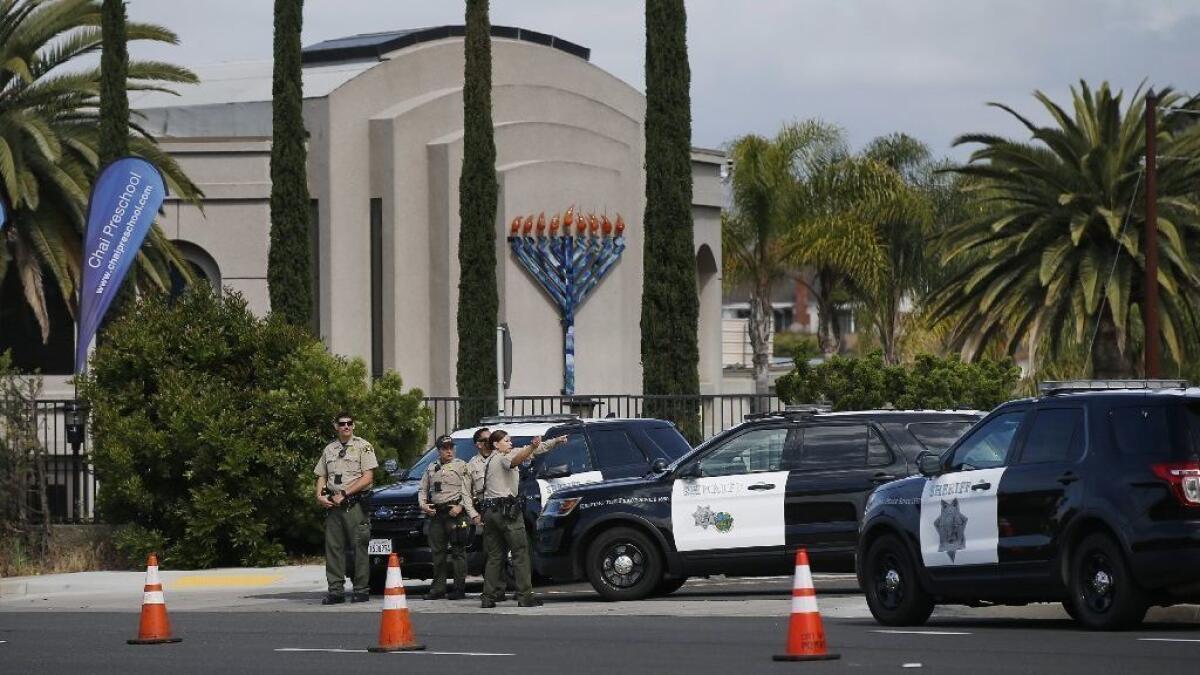
This year, in this country, Jews are the most likely of all minority groups to face hate crimes. In the land of the free, policemen guard the gates to synagogues to prevent violence inspired by a hate that transcends ideological bounds, nations, and even time itself. Modern-day America has demonstrated that confronting antisemitism is no longer optional. In Sydney as in America, hatred doesn’t stay on paper, or online, or even in chants — it turns deadly.